
Mystical Marketplace
Greetings & Salutations — Welcome to the Mystical Marketplace, the store of Mystical Aqoostix. Here you will find my books in the Mystical Library, my sessions in Mystical Services, and my Courses — everything in one place, with the same secure checkout as always. Rev. Monica Scarborough, C.Ht., B.Msc. — Founding Minister of Mystical Aqoostix

Mystical Services
Hypnotherapy — Individual Session
$150 $125
A private, one-on-one hypnotherapy session. I work with your subconscious mind, guiding you into deep relaxation, where the patterns underneath your habits, stress, and struggles can be reached and changed — so the change holds in your daily life. Your session is prepared for you and your specific concern. Sessions are held via phone or video.
What's included:
- Your private hypnotherapy session, 45 to 50 minutes
- A recorded affirmation, created personally for you after your session
- A recorded affirmation song
- An instructional email with your recordings and guidance for using them
- A 10-minute follow-up call
- Year-end bonus (through December 31, 2026): bonus affirmations, personally recorded by me, with instructions for your daily practice
To book hypnotherapy, you must first take the Suggestibility Test.
Coping Skills Hypnotherapy Session
$125 on sale
A hypnotherapy session devoted to your coping skills. Together we create coping skills for the situations that press on you, then practice them while you are under hypnosis — so they are there for you when you need them.
Group Hypnotherapy Session
Starting at $300
A hypnotherapy session for your own group. I work with your group together — guiding everyone into deep relaxation and to the patterns ready to change — so you can heal and grow side by side.
- Starts at $300 for four people; each additional person is $75
- When you book, give me the first name, last initial, age, and email address of everyone attending
- Each person receives their own recorded affirmation
- Each person receives their own recorded affirmation song
- Each person receives their own instructional email
- After the session, I send a follow-up email to the group
- Everyone attending must be 18 or older, unless accompanied by a parent or an adult
Vibrational Attunement Session / Tuning Fork Therapy
$75 $35 on sale
A one-on-one tuning fork session using weighted and non-weighted forks. I place the weighted forks directly on your body, so the vibration carries deep into the tissues, and work with the unweighted forks in the energy field around you. Together they support grounding, clearing, and balance. In person. The full Tuning Forks section is below.
Custom Recorded Hypnotherapy Session
$100
A hypnotherapy session created just for you — delivered as an audio recording.
What you do:
- Fill out the intake form
- Take the suggestibility test
- Send me your information — what you want your session to work on
What I do:
- I review your intake form and your test results
- I do the analysis and create your session from what you have told me
What you receive: your custom session as an audio recording — yours to listen to where it is safe to relax completely.
Pack of Three Sessions
$325
A pack of three hypnotherapy sessions. Buy them together, and book each session when you are ready.
Pack of Six Sessions
$625
A pack of six hypnotherapy sessions — buy six, and one of them is free. Book each session when you are ready.
Smoking Cessation Program
$120 · Members $60
A six-week program to help you quit smoking for good. Each week, counseling and hypnotherapy work together — on the habit itself, and on the patterns underneath it that keep pulling you back. Your program is built around your triggers and your reasons for quitting.
- Six weekly sessions, about one hour each — counseling and hypnotherapy together in every session
- Root cause work in Week 1
- Every session also includes breathwork, meditation, Tai Chi-style energy movement, tuning forks, and singing bowls, with affirmations throughout
- A recorded affirmation, created for you, for the hard moments and cravings
- Guidance for handling cravings and triggers between sessions
- “My Contract With Myself” — a personal commitment between you and your own subconscious mind, signed in Week 1 and revisited in Week 6. It is not a legal contract, and not a contract with Rev. Monica or the church.
- A participant guide and journal, with beginning and ending measures each week
The six weeks: Week 1 — The Root of the Habit · Week 2 — Preparing to Let Go (the quit day is chosen this week) · Week 3 — Quit Week: The First Days Free · Week 4 — Riding the Waves · Week 5 — The New Identity · Week 6 — Living Free
Members of Mystical Aqoostix: $60 — that is $10 per weekly class. Member pricing applies to select services, and this program is one of them. Open to members and non-members.
This program is education and support. It is not medical care, and no result is promised or guaranteed.
The Mystical Aqoostix Library
The Mystical Aqoostix Library is where my work lives in written and recorded form — books to read, audios to listen to, and videos on the way.
- Books — my published works, ready to order
- Audios — recordings to listen to and learn from
- Videos — coming soon
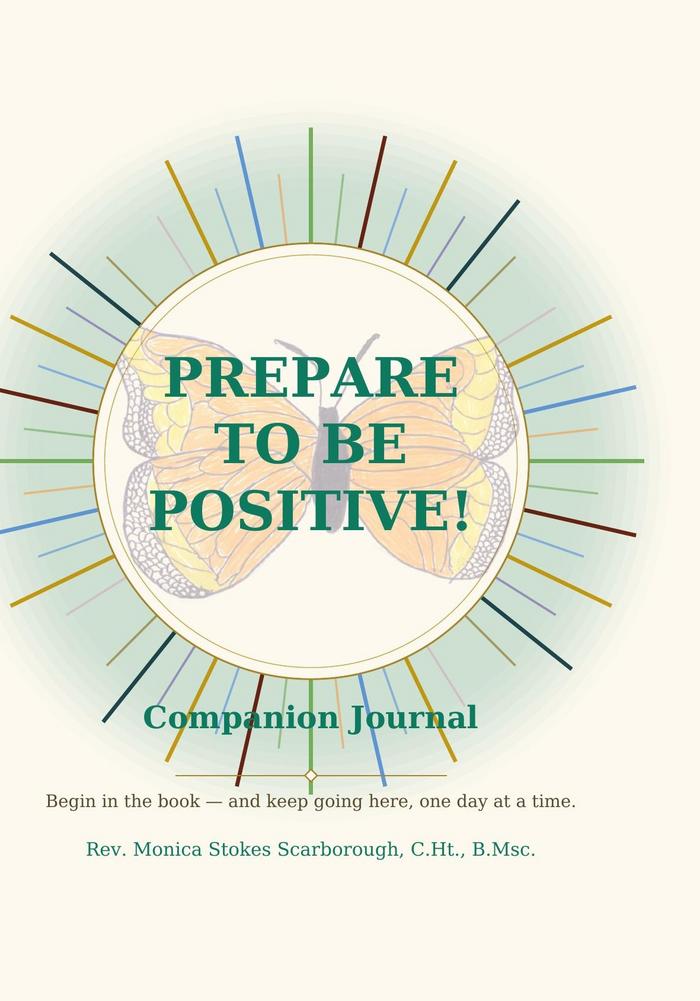
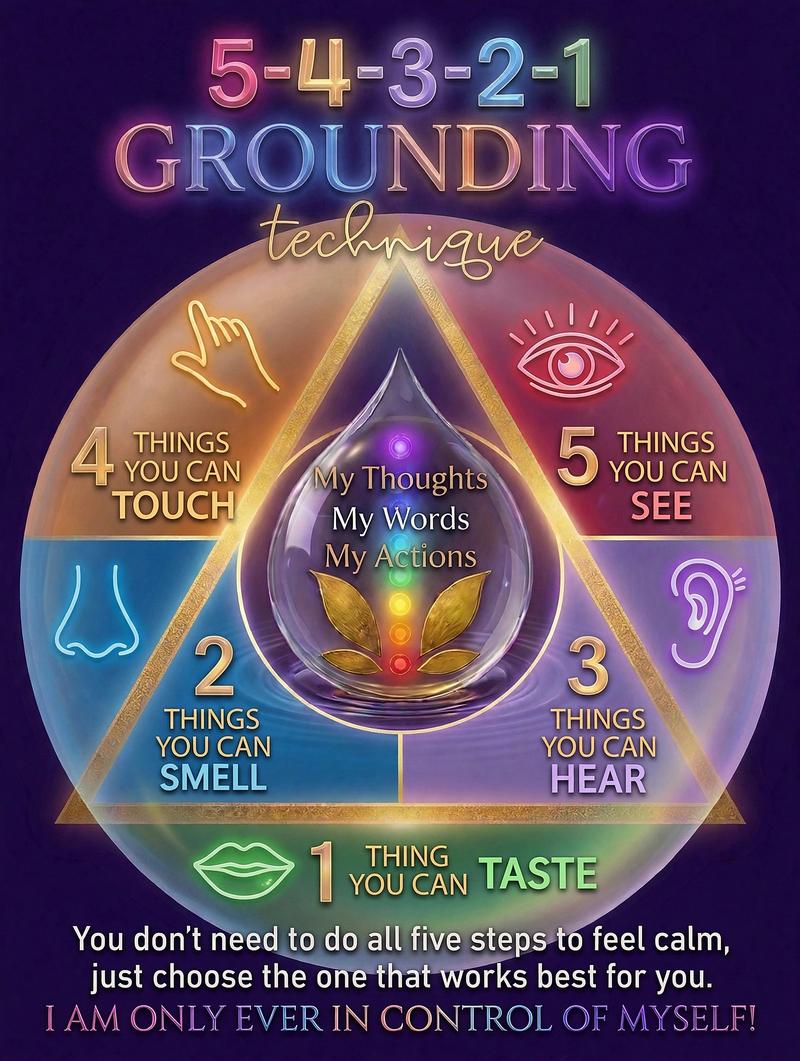 COMING SOON
Emotional Intelligence Posters
COMING SOON
Courses
 COMING SOON
The Art of Forgiveness — The Course
The full teaching of The Art of Forgiveness, as a course you can buy. Two ways to take it: the Student Version, to complete the work yourself, and the Teaching Version, to learn to teach it to others.
 COMING SOON
Emotional Intelligence — The Course
The path that follows The Art of Forgiveness: learning to know your feelings, understand them, and work with them instead of being carried by them. This course is being prepared now, lesson by lesson, and will be offered here when it is ready.
 GIVE A GIFT
Support the Ministry
Mystical Aqoostix is a nonprofit church. If these teachings and this work have blessed you and you would like to support the ministry, your gift is welcomed — always voluntary, never required.
Tuning Forks
Members, clients, and fellow mystics often ask Monica which forks to get for their own practice. She does not sell forks herself — these are the ones she points people to. There are two ways in: start with the complete set, or grow into stainless steel one piece at a time.
Tuning Fork Therapy — IN PERSON
$75 $35 Sale price
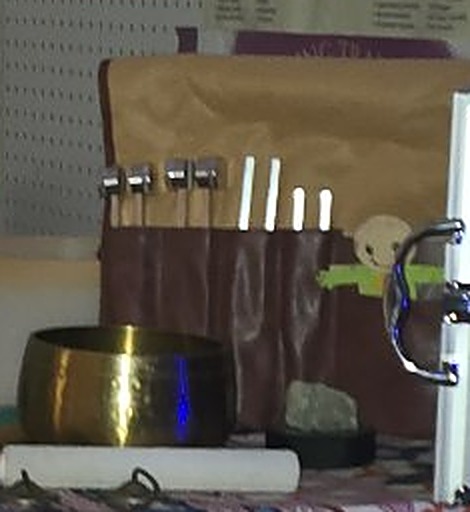
The Vibrational Attunement Session — a one-on-one tuning fork session. Monica works with two aluminum sets: her Chakra Set, a color-coded Solfeggio set with a fork tuned for each of the body's energy centers, used for clearing and balancing; and her silver Weighted Set, kept in its roll case, whose weighted forks are placed directly on the body so the vibration carries deep into the tissues. Together they support grounding, fluid flow, and deep integration, with targeted frequencies including 174, 396, 528, 639, and 432 Hz. Your session begins with a conversation about your issue, and then the tuning fork session itself. Afterward, you receive: A personal guide sheet, made for you and for your own issue, with what to do — to take with you. A recorded affirmation song. Affirmations and thought patterns. Breathwork.
A link to buy the tuning forks for yourself, if you want them
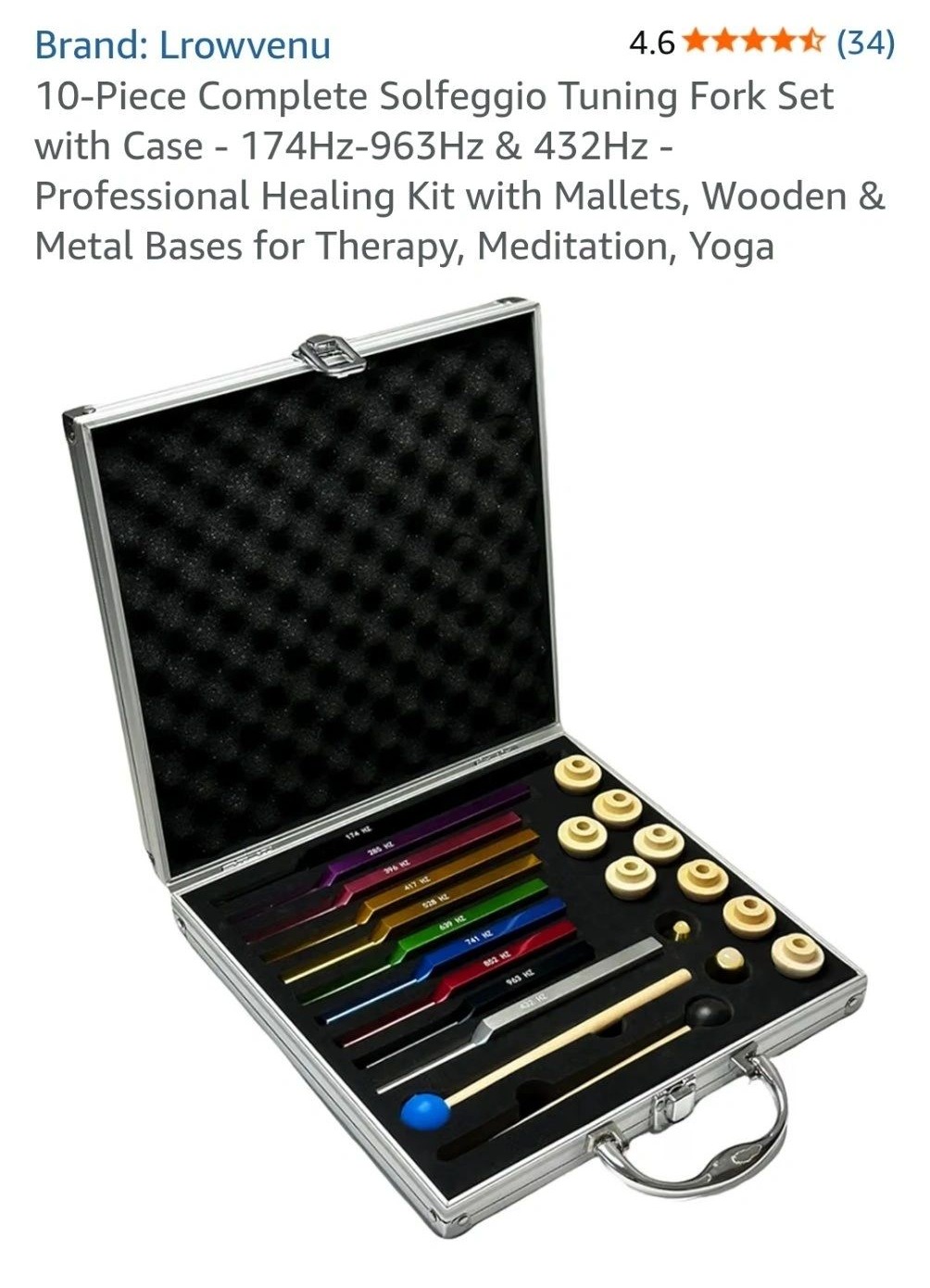 START HERE — MONICA'S OWN STARTER SET · UNWEIGHTED
Lrowvenu 10-Piece Complete Solfeggio Tuning Fork Set with Case — 174Hz-963Hz & 432Hz
The complete Solfeggio frequencies from 174 Hz to 963 Hz, plus 432 Hz. Ten pieces with mallets and wooden & metal bases, in an aluminum carrying case. A beginner set Rev. Monica owns and uses.
Buy the Lrowvenu Set on Amazon
Affiliate link — see the disclosure below.
 BEGINNER SET · WEIGHTED
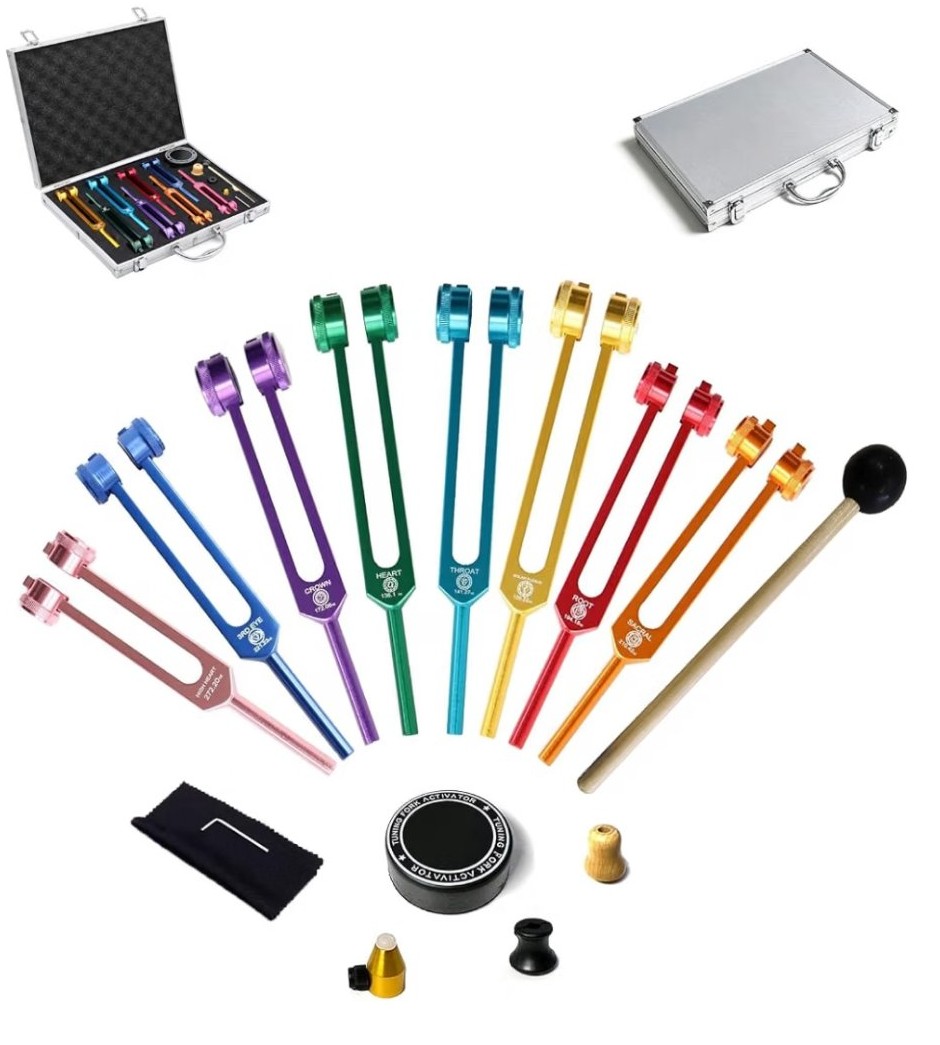
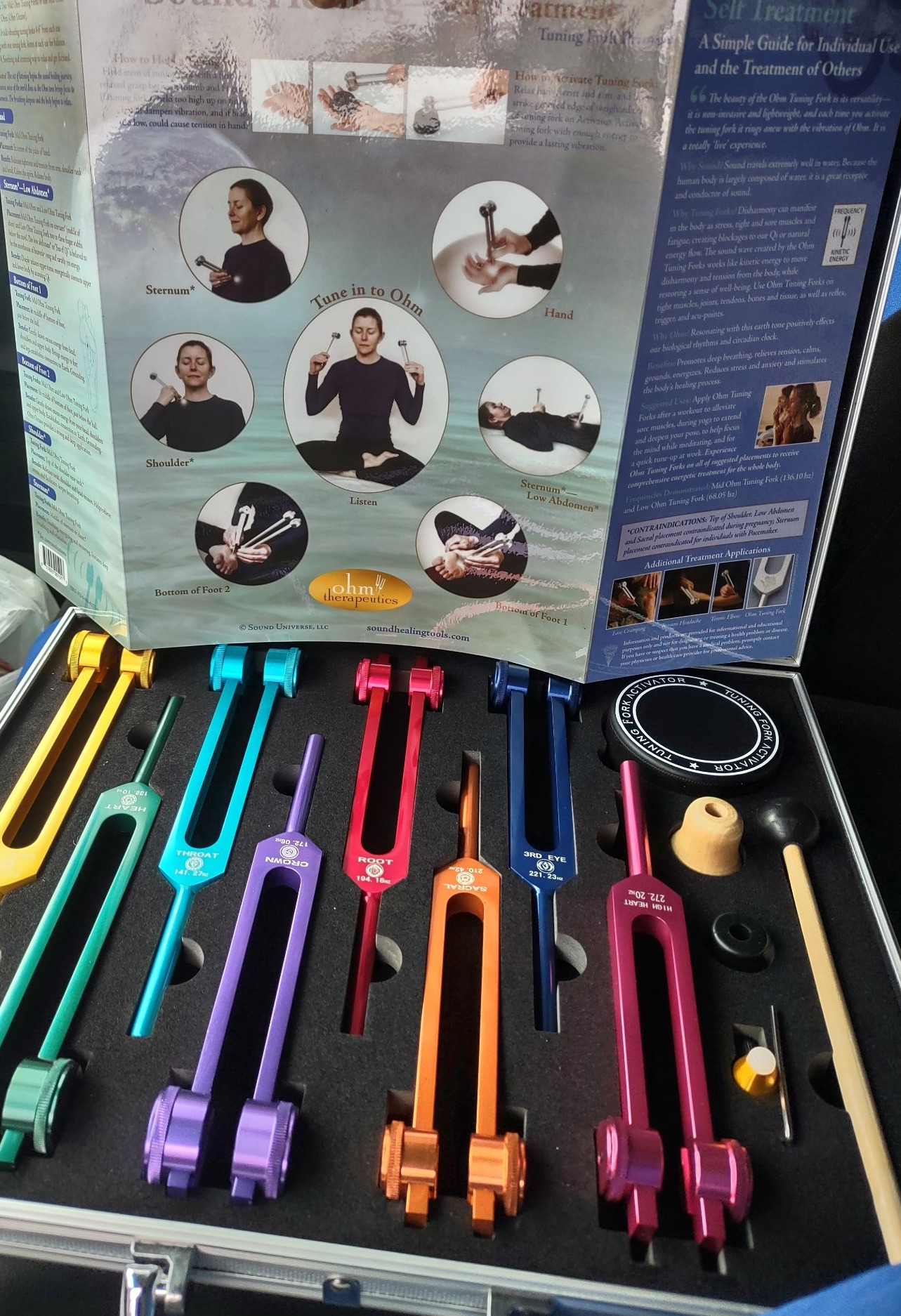
MIMIRACLE Weighted Chakra Tuning Fork Set, Solfeggio Healing Forks with Box
Seven chakra-frequency forks, each weighted with colorful round weights on the fork ends. Aluminum alloy, with a storage box, activator, and mallet. A beginner set Rev. Monica owns and recommends.
Buy the MIMIRACLE Set on Amazon
Affiliate link — see the disclosure below.
 BEGINNER SET
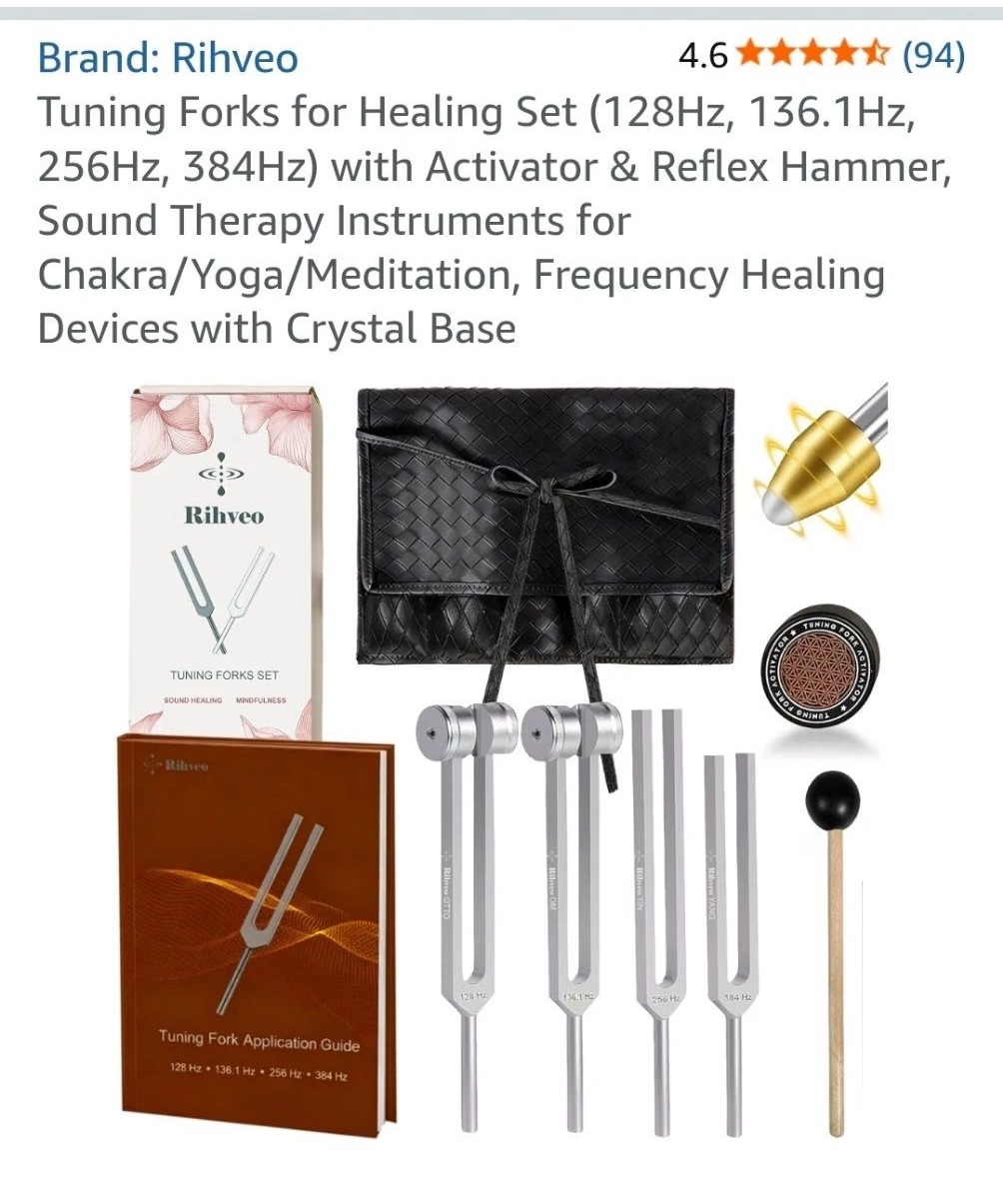
Rihveo Tuning Forks for Healing Set (128Hz, 136.1Hz, 256Hz, 384Hz)
A beginner set Rev. Monica owns and recommends. Four forks — 128 Hz, 136.1 Hz (OM), 256 Hz, and 384 Hz. It is a mixed set: the 128 and the 136.1 are weighted, the 256 and the 384 are unweighted. Comes with an activator and reflex hammer, a crystal base, an application guide, and a carrying case.
Beginner Sets
 BEGINNER SETS · ALUMINUM
OtterRest Aluminum Weighted Tuning Forks for Healing
A beginner set Monica points people to — a starter set for learning to use tuning forks for yourself, at your own pace.
Buy This Beginner Set on Amazon
Affiliate link — see the disclosure below.
 BEGINNER SETS · STEEL
Beginner Set — Steel
A beginner set Monica points people to — a starter set for learning to use tuning forks for yourself, at your own pace.
Buy This Beginner Set on Amazon
Affiliate link — see the disclosure below.
 BEGINNER SETS · COLORED
Beginner Set — Colored
A beginner set Monica points people to — a starter set for learning to use tuning forks for yourself, at your own pace.
Buy This Beginner Set on Amazon
Affiliate link — see the disclosure below.
Stainless Steel Forks, One at a Time
When you are ready for steel, these are bought piece by piece, by maker and frequency: Gardiner Brown brushed stainless steel forks — 128 Hz, 256 Hz, and 512 Hz. FSHANEE stainless steel fork — 384 Hz. Two honest notes before you shop: the steel forks overlap on 256 Hz and 512 Hz, so you may end up with two forks at the same frequency in different materials; and no stainless steel OM 136.1 Hz fork was found — for OM, the Aimery set below remains the one to use. Look for these by maker name and frequency wherever you buy your forks.
 START HERE — COMPLETE SET
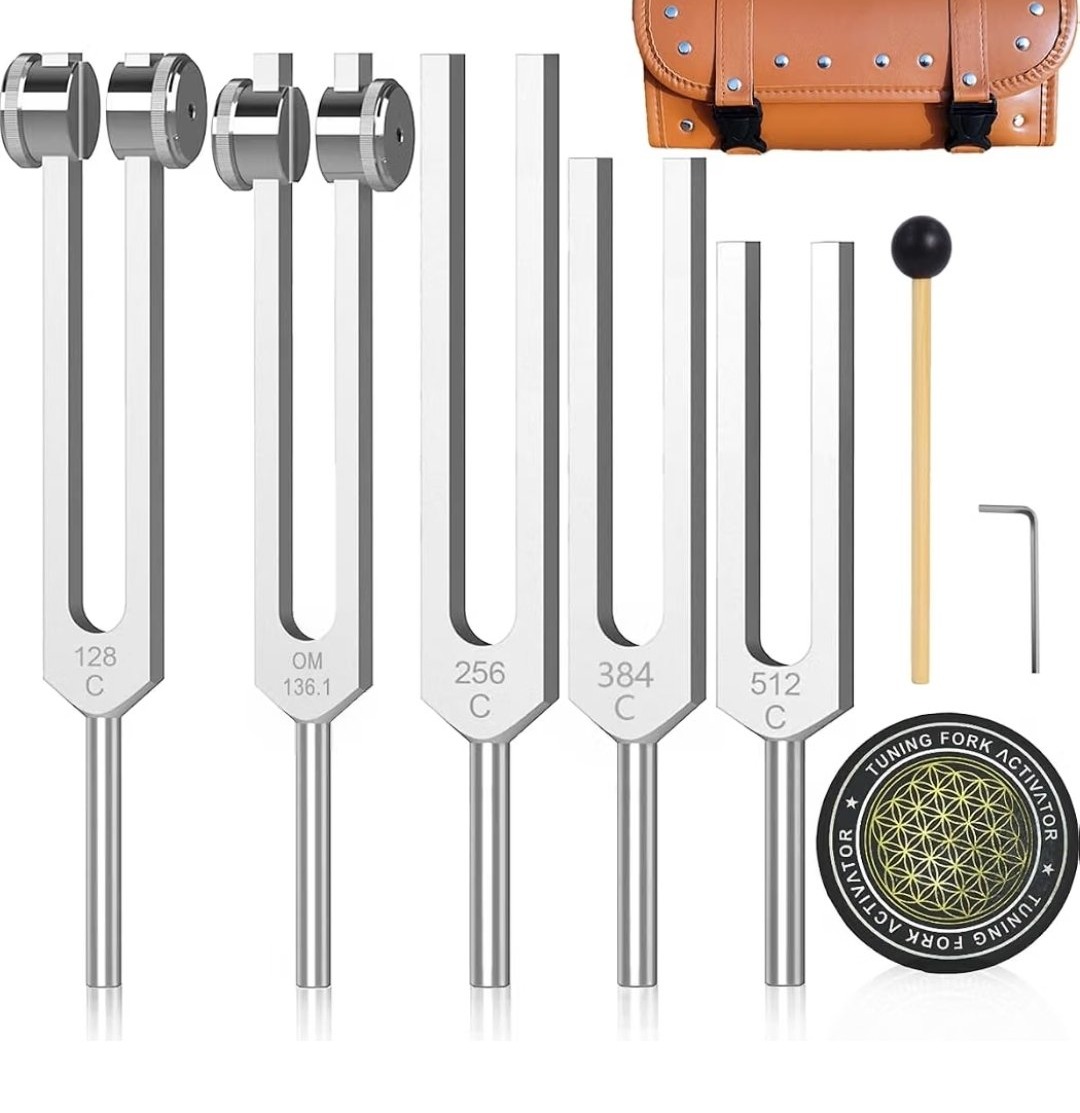
Aimery Resonance Tuning Fork Set
The complete set, and the affordable way to begin. These are the five frequencies of Monica's Art of Forgiveness tuning fork protocol, all in one set: 128 Hz. OM 136.1 Hz. 256 Hz. 384 Hz. 512 Hz. Weighted and unweighted forks, with an activator, in its own storage roll. One purchase gives you every fork the protocol calls for.
Affiliate link — see the disclosure below.
Affiliate disclosure: The Amazon links on this page are affiliate links for Mystical Aqoostix. If you buy through one, Mystical Aqoostix may earn a small commission — at no extra cost to you. The price you pay is the same.
Sacred Saturdays
A FREE LIVE TEACHING EVERY SATURDAY MORNING
Join Monica Scarborough of Mystical Aqoostix every Saturday morning at 8:30 AM Central for a free live teaching on Facebook Live. Each week we take on a new topic for healing and growth, with lessons you can put into practice right away. Kicking off with: Why Is Forgiveness So Hard? The Ego's Role in Forgiving
Previous Sacred Saturdays: Sacred Saturdays 10/24/2026 — The real reason forgiveness is so hard: the ego.
Sacred Saturdays Program — The Art of Forgiveness — October 31, 2026 · Stage 1 · Recognition
Greetings & Salutations. Welcome to The Art of Forgiveness. Forgiveness is not a single moment — it is a journey, and it moves in six stages: Recognition, Acceptance, Release, Compassion, Restoration, and Integration. We take one stage each week, in order. Today is Stage 1: Recognition. This program walks you through the service, step by step, and everything in it is yours to download and keep.
HOW THE SERVICE FLOWS
- Opening bowl meditation. We open in meditation with the bowls and chant — sound first, so the body can arrive before the teaching begins.
- Welcome. Greetings & Salutations, and the intention for the morning: My intention is to allow my ego to let me forgive.
- The Six Stages video. We watch the short video together — it introduces all six stages so you can see the whole journey before we take the first step.
- Today's teaching — Stage 1: Recognition. Recognition is the brave act of facing your emotional reality without masking or minimizing it: naming the specific hurt, letting yourself feel what is there, and stopping saying "I'm fine" when you are not. The ego renames pain to protect us; self-awareness is how we see past it. You cannot release what you have not first recognized.
- The practice — sound and breath. The sacral bowl, the gong, and the 128 Hz tuning fork placed on the lower abdomen and the pelvic floor, with the breathwork for this stage.
- The affirmation, together. "I acknowledge the absolute truth of my feelings, and I am safely anchored in this awareness."
- Your worksheet. Questions, think pieces, and journaling for every stage — work the Stage 1 page this week.
- Closing. Forgiveness is the path to freedom. Peace, Love and Light.
THIS WEEK'S PRACTICE
Notice and name: three times a day, stop and ask — what am I feeling right now, and where do I feel it in my body? Name it correctly. Then sit with this question: What exactly hurt — and what did it take from me that I have not let myself grieve yet?
This program is for education and personal growth only. It is not medical care, diagnosis, treatment, or therapy, and it is not a substitute for a doctor or a counselor. If you are in crisis or thinking of harming yourself or someone else, call 911 or your local emergency number.
Wisdom Wednesdays
What Is Metaphysics, Really?
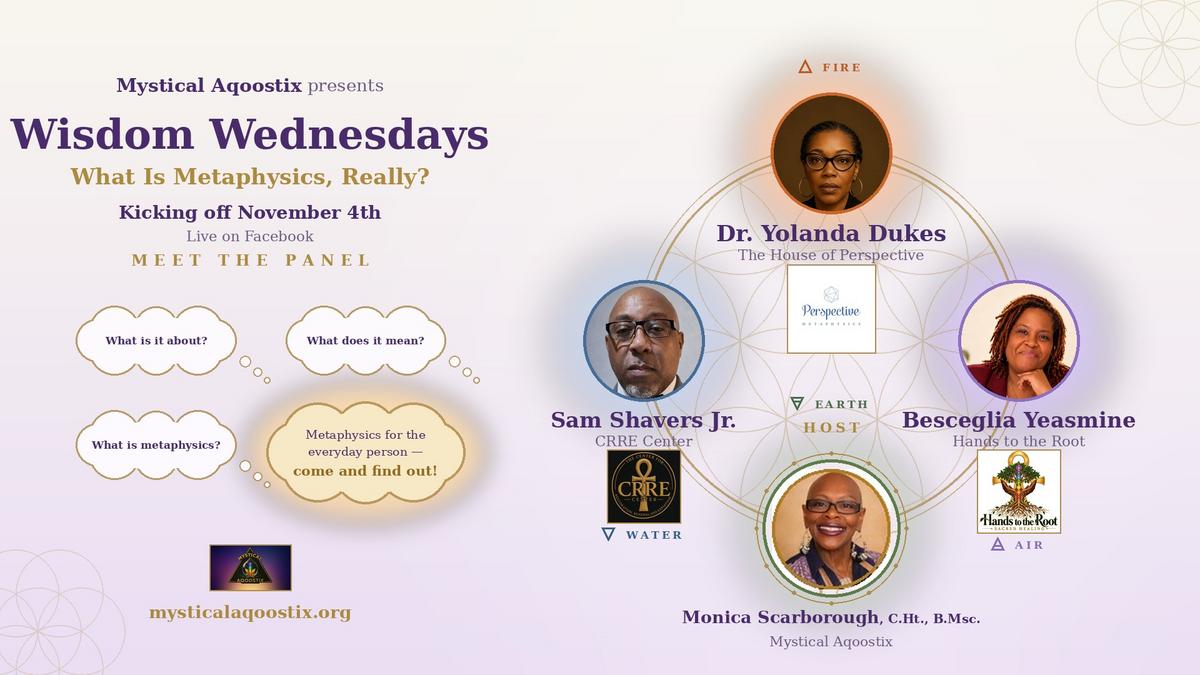
What is metaphysics? What is it about? What does it mean? If you have ever asked those questions, Wisdom Wednesdays was made for you. This weekly teaching series offers metaphysics for the everyday person — plain language, real conversation, and room to ask anything. Join us live on Facebook, kicking off November 4th. Each week, one panelist teaches and the whole panel sits for questions and answers. Different backgrounds, different perspectives, one honest conversation about the unseen forces that shape our lives.
Meet the panel: Rev. Monica Scarborough, your host · Sam Shavers Jr. · Dr. Yolanda Dukes · Besceglia Yeasmine.
The Chakra Experience
By Rev. Monica Scarborough, C.Ht., B.Msc. — Founding Minister of Mystical Aqoostix
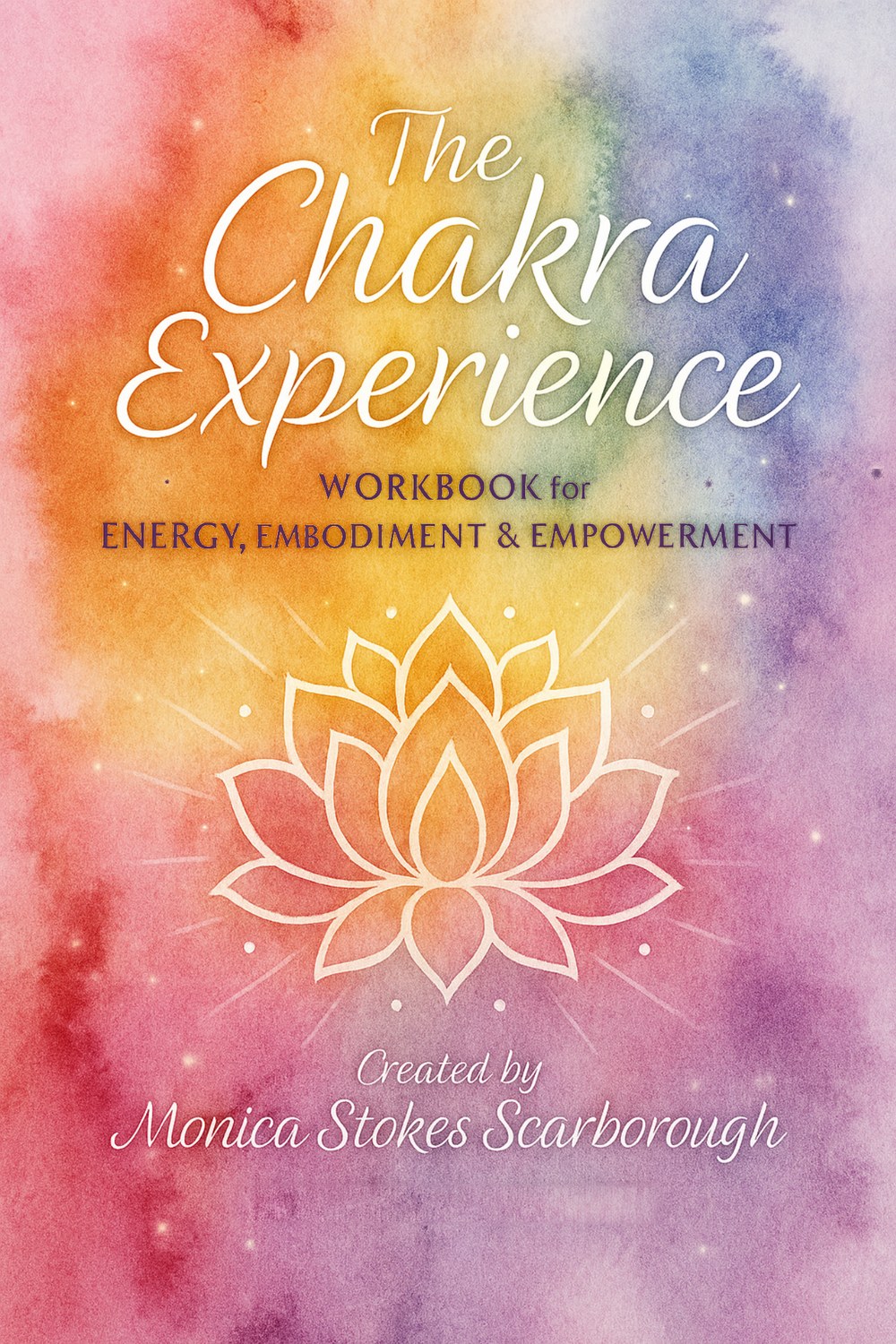
The Chakra Experience — Student Package
Welcome. When you buy the book, this is what you get — the whole teaching, gathered in one package.
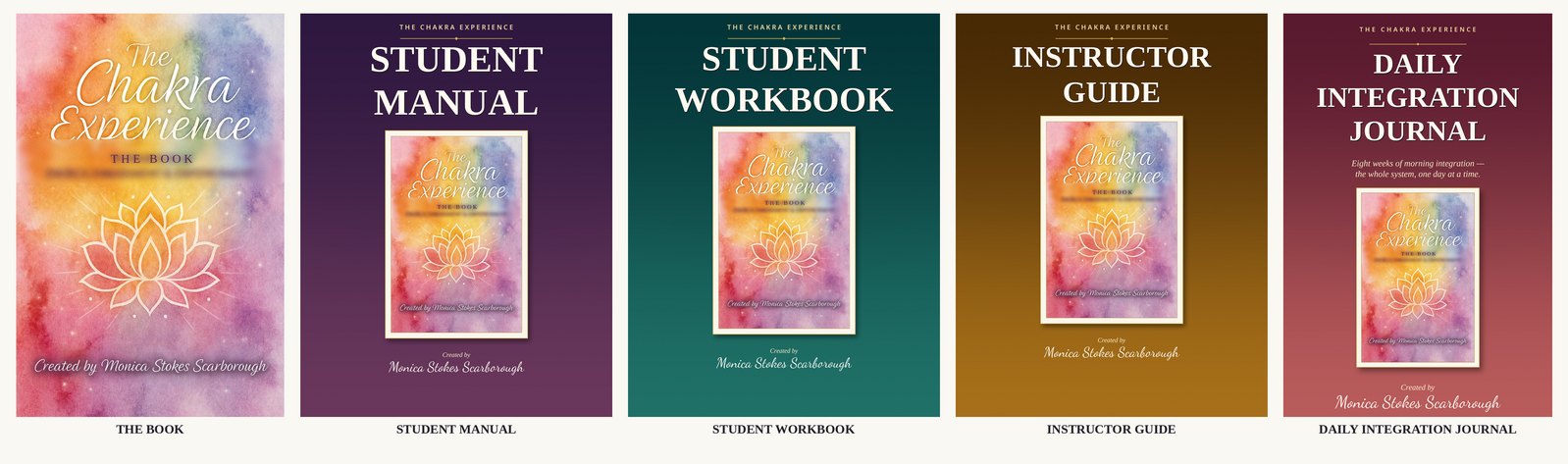
Books
- The Chakra Experience — The Book. The complete teaching in two parts: Part One, Knowledge, Wisdom, Understanding; Part Two, the Experience. Eight weeks, Root to Crown and into Integration, with the affirmation for every week woven through.
- The Student Manual. Your class companion — the lessons and the practices in order, week by week, so you can follow the teaching as it unfolds.
- The Student Workbook. Your own work — exercises, prompts, and reflection pages for each week, in your own words and your own time.
- The Daily Integration Journal. Fifty-six day pages for living the teaching day by day: the morning integration practice of intention, breath, pose, Qigong movement, and writing space.
Cards
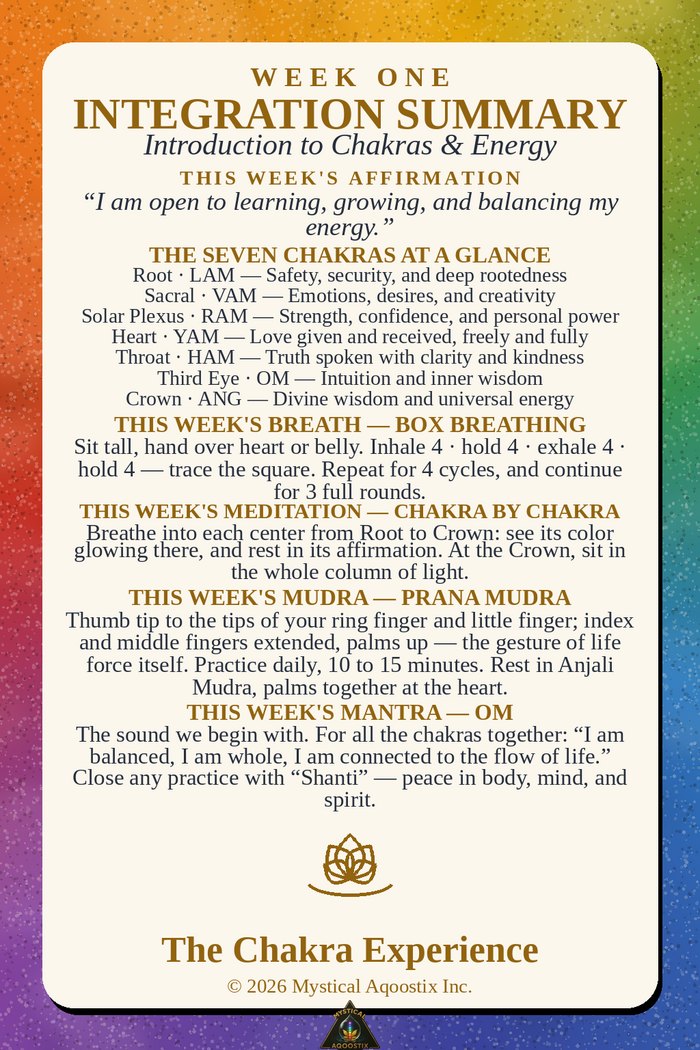
The full card deck — 79 cards in all, plus the Week One Integration Summary Card.
- The Seven Practice Sets — 49 cards. Breathwork, Mudra, Mantra, Meditation, Food Ritual, Gemstone, and Integration — seven cards in each set, one for every chakra.
- The Movement Set — 21 Qigong cards. Three yoga poses for each chakra, and every pose flows into its Qigong movement — meditated movement, card by card.
- A Guide Card for Every Set — 8 cards. One guide card with each set, so you always know how the set is used.
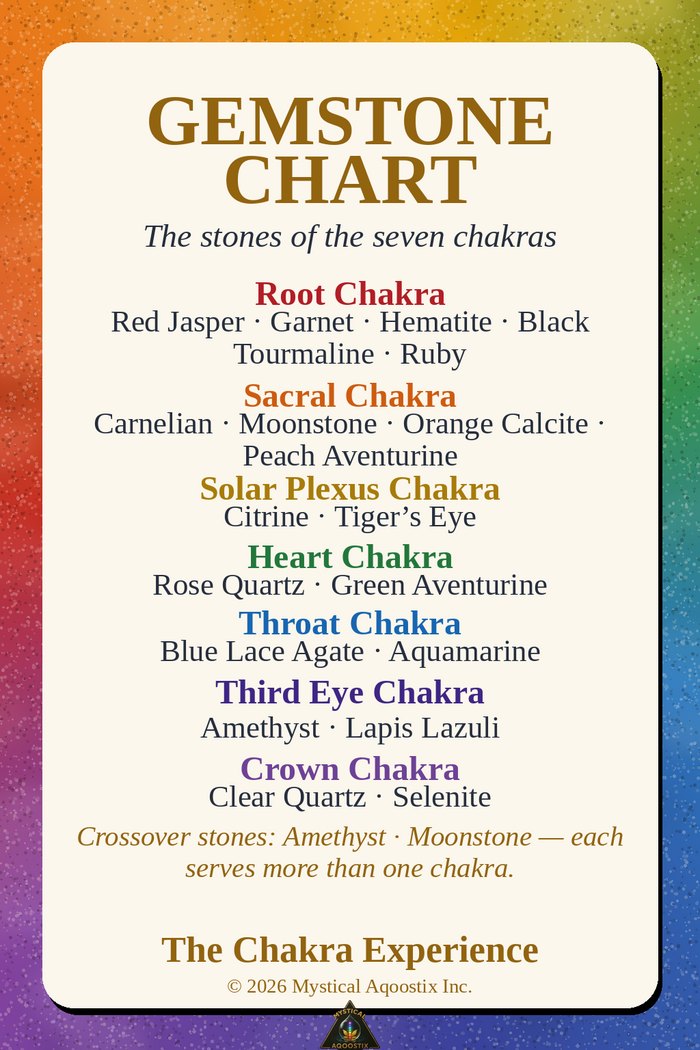
- The Gemstone Chart Card. Every chakra's stones at a glance, on one card.
- The Week One Integration Summary Card. The whole first week gathered on one card — everything you learned, front and back.
Practice Tools
- The Chakra Inquiry Worksheet. A page for inquiring into your own energy — where you are, and what is asking for your attention.
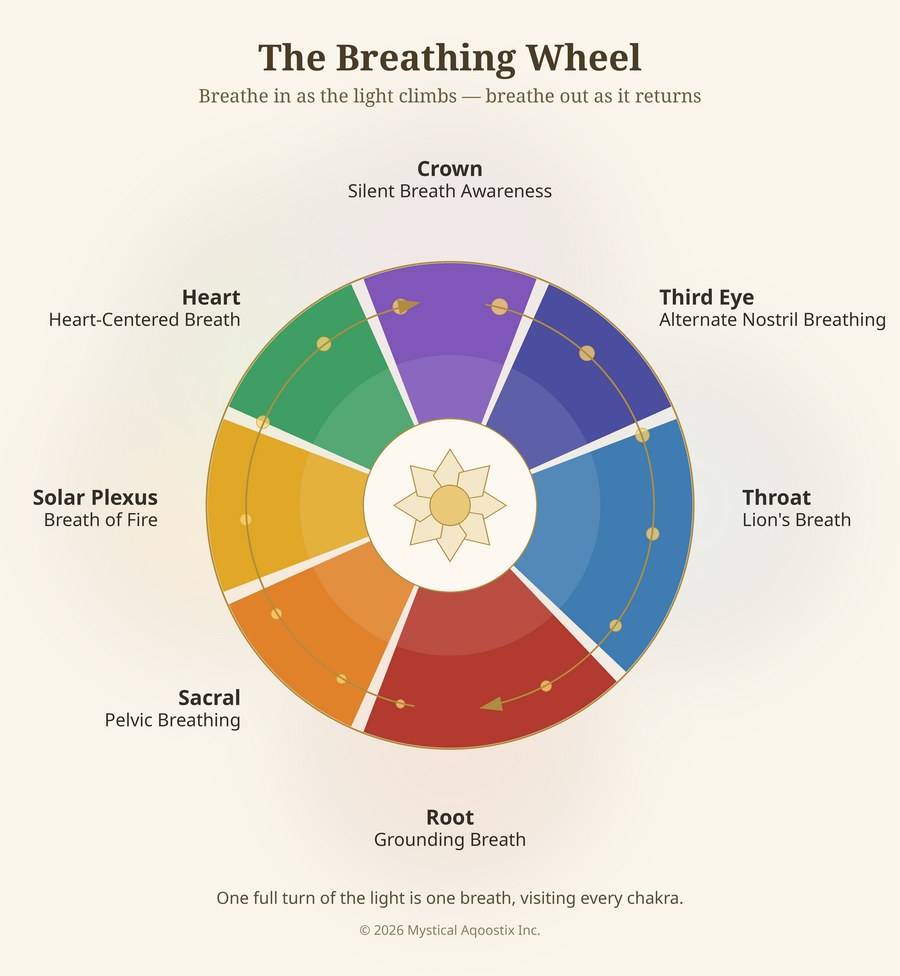
- The Breathing Wheel. The breathing patterns of the whole system on one printed wheel, ready to use in your practice.
Everything in this package belongs together — one whole system.
Teach The Chakra Experience — Certification Package
Teach the full Chakra Experience course — eight weeks, Root to Crown plus Integration — and hold everything you need to teach it in your hands.
Certification
Certification to teach The Chakra Experience — teach the complete course, week by week, as it was written.
The Books
- The Chakra Experience — The Book. The complete teaching: the knowledge, wisdom, and understanding, and the experience itself.
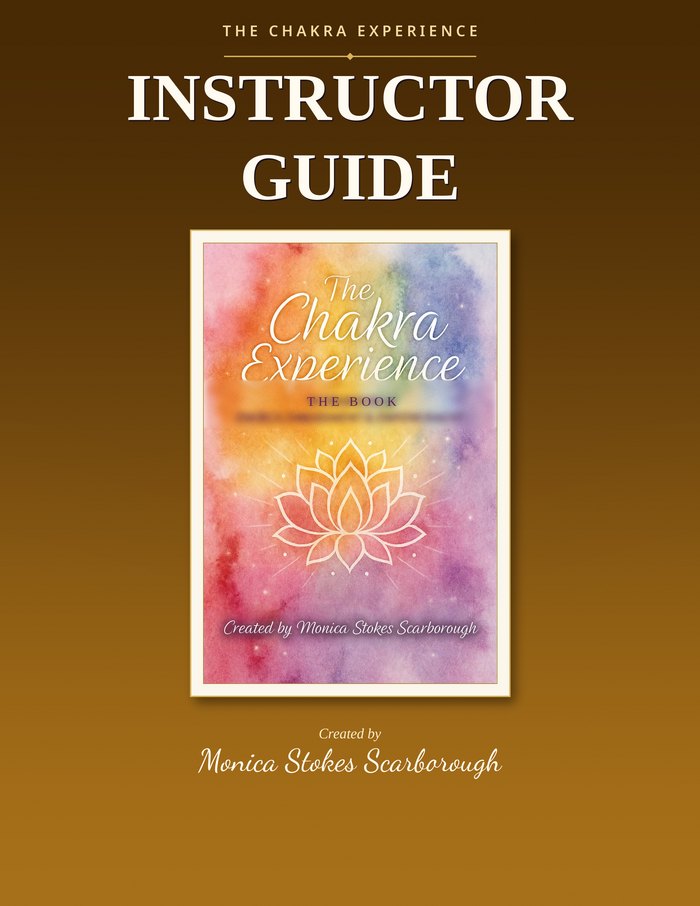
- The Instructor Guide. The teacher's book — how to run each week of the course.
- The Student Manual. The class companion, so you hold the lessons your students hold.
- The Student Workbook. The students' own work — exercises, prompts, and reflection pages.
- The Daily Integration Journal. The day-by-day morning integration practice, so you can live what you teach.
The Cards
The full card deck — 79 cards, plus the Week One Integration Summary Card. Seven practice sets (Breathwork, Mudra, Mantra, Meditation, Food Ritual, Gemstone, Integration), the Movement set of 21 Qigong cards, a guide card for every set, and the Gemstone Chart card.
Practice Tools
- The Chakra Inquiry Worksheet.
- The Breathing Wheel (print).
Price: $249. A $499 value.
Everything you need to teach The Chakra Experience is in this package — there is nothing else to buy.
Membership
Become a Member of Mystical Aqoostix

Greetings and Salutations. Mystical Aqoostix is an online ministry and spiritual community, and membership is free. When you become a member, you belong here — you receive our weekly members newsletter every Monday, invitations to Sacred Saturdays and Wisdom Wednesdays, guided meditation gatherings, and replay links when teachings are recorded. Everything we do together is online. Our free teachings and free services are free. One-on-one services are paid services, booked separately and only if you choose them. Donations are voluntary and never required for membership. We use your email only for Mystical Aqoostix news, teachings, and invitations, and we never sell or share your information. You may leave at any time.
Tests, Banks & Tools
The Forgiveness Bank, the Self-Care Bank, and the Etymology Bank — with the Emotional Intelligence Mall, the tests, and service booking, all in one place.
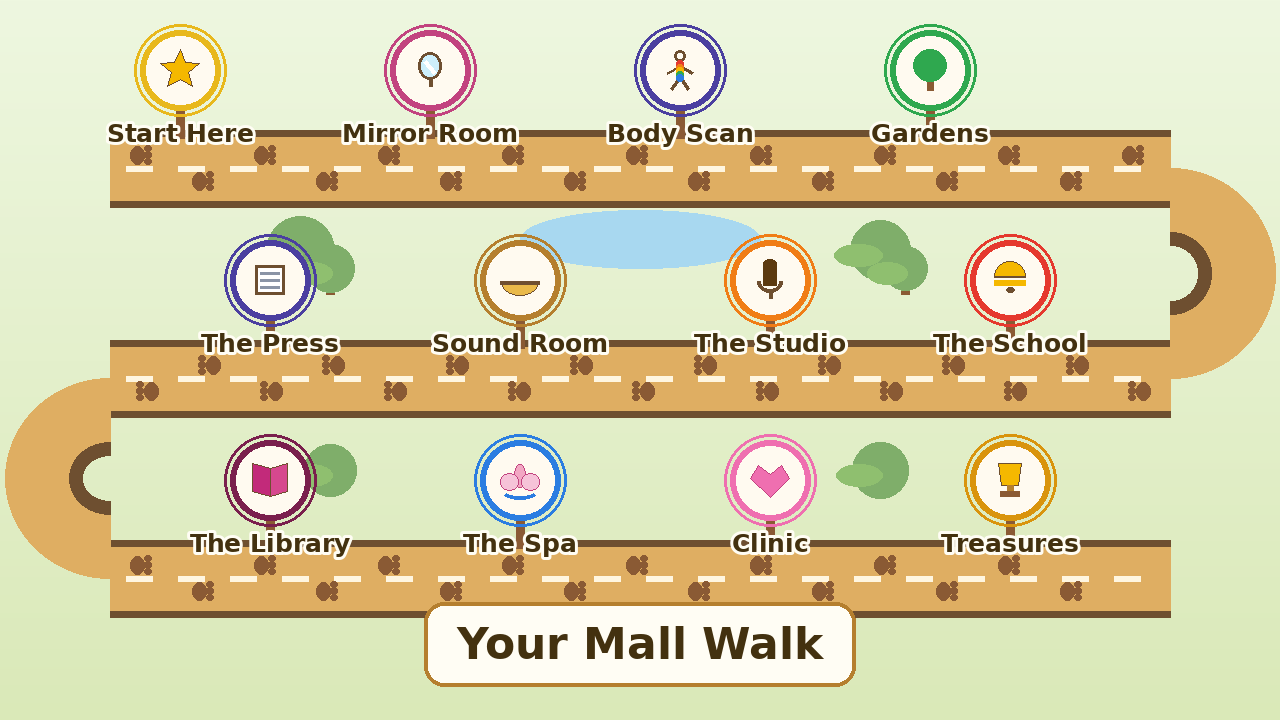 Emotional Intelligence MallThe whole collection in one place.
 Forgiveness BankWords and practices for the forgiveness journey.
 Self-Care BankSelf-care for an ordinary day.
 Etymology BankWhere our everyday words come from.
 Suggestibility TestTake this first, before booking hypnotherapy.
 Mind & Body Tests (Guided Response)Guided-response tests for mind and body.
 Rewiring Your Subconscious MindSee the patterns underneath, and begin the rewiring.
 Do I Like Me?Asked from your own side.
 Am I Ready for a Relationship?An honest look at readiness.
 Booking CartPick your date and time — BOOK NOW for every session.
Newsletter
Mystical Moments
Stay connected with Mystical Aqoostix, wherever you are. Every Monday, our newsletter recaps what we did that week — the teaching we shared, a practice to carry with you, replay links when a teaching is recorded, and what is coming up next for Sacred Saturdays and Wisdom Wednesdays. The newsletter is free, and you do not have to be a member to receive it. All are welcome to sign up. We use your email only for the Mystical Aqoostix newsletter and ministry news. We never sell or share your information. You may unsubscribe at any time by replying to a newsletter and letting us know.
Medical & Health Disclaimer
Please read this disclaimer carefully before booking, attending, or participating in any service, session, class, teaching, or event offered by Mystical Aqoostix, in person or online.
1. Who we are — and who we are not. Mystical Aqoostix is a church. Every service, session, class, and teaching offered here is a ministry of this church, provided by Rev. Monica Scarborough, C.Ht., B.Msc., its founding minister — an ordained minister and certified clinical hypnotherapist. These are church ministries of a spiritual, educational, and holistic wellness nature — ministerial and wellness work. Mystical Aqoostix is not a medical office or clinic. Monica Scarborough is NOT a medical doctor. She is not a licensed physician, psychiatrist, psychologist, licensed professional counselor, licensed marriage and family therapist, social worker, nurse, or any other licensed health care provider. Nothing offered by Mystical Aqoostix is medical care, mental health treatment, or physical therapy.
2. Nature of the services. The services offered include: clinical hypnotherapy and hypnosis; sound healing and sound baths (including crystal singing bowls and gongs); tuning fork and frequency sessions; relationship and family counseling and metaphysical counseling of a pastoral and spiritual nature; guided meditation; breathwork; and spiritual teaching and practices including affirmations, chanting, mantras, and mudras. These services are provided for spiritual growth, education, relaxation, and holistic wellness purposes only. They are not intended to diagnose, treat, cure, mitigate, or prevent any disease, injury, or medical or mental health condition, and no service is represented as doing so. No medical advice is given. Monica Scarborough does not prescribe medication, does not interpret medical tests or diagnoses, and will never advise you to discontinue or change any medication or treatment prescribed by your own licensed provider. These services are offered to support your overall well-being alongside — never in place of — the care of your licensed physicians and other licensed providers.
3. Consult your own providers. Always seek the advice of your physician or another qualified, licensed health care provider with any questions about a medical or mental health condition, and never disregard professional medical advice or delay seeking it because of anything you have read on this website or experienced in a session. If you are working toward a goal that touches a medical or mental health condition, you are encouraged to do so in coordination with your licensed provider, and some services may require your provider's knowledge or referral. Please keep your providers informed that you are receiving these services.
4. Hypnotherapy and hypnosis. Hypnosis is a state of focused attention and deep relaxation. It is not sleep, and it is not mind control: you remain aware, you cannot be made to do anything against your will or your values, and you may end a session at any time. Individual results vary, and no specific outcome is promised or guaranteed. Statements, images, or memories that arise during hypnosis are your own subjective experience; they are not necessarily factually accurate, and they are not evidence of past events. Hypnosis and hypnotherapy are not a treatment for mental illness. If you have been diagnosed with epilepsy, a psychotic disorder (such as schizophrenia), severe depression, or another serious mental health condition, consult your physician or mental health provider before receiving hypnosis, and understand that referral to a licensed provider may be required. Never listen to hypnosis, meditation, or sound recordings while driving or operating machinery.
5. Sound healing, sound baths, and tuning fork / frequency sessions. Sound and vibration work is gentle and non-invasive, but it is not appropriate for every person in every circumstance. Singing bowls and tuning forks produce strong, sustained vibration and overtones, and weighted tuning forks are applied directly to the body. Consult your physician before booking a sound or frequency session if any of the following apply to you, and inform Monica Scarborough before your session: a pacemaker, defibrillator, cochlear implant, insulin pump, deep brain stimulator, stent, shunt, or any other implanted electrical or medical device (instruments will not be placed directly on or over such devices; if you have a pacemaker or any other implanted device, please receive your physician's approval before sound-based sessions); epilepsy or any seizure disorder, including sound-triggered seizures; pregnancy, especially the first trimester (instruments will not be placed on the abdomen or lower back during pregnancy); metal implants, plates, pins, screws, or artificial joints, recent surgery, fractures, or injuries, open wounds, or a history of blood clots or deep vein thrombosis (weighted tuning forks will not be applied over these areas); a serious or clinical mental health condition, unless your provider has confirmed that a session is appropriate for you; or tinnitus, sound sensitivity, or hearing aids (please say so, and you will be seated farther from the instruments). Hearing aids: if you wear hearing aids, please let Monica Scarborough know before your session. Some clients with hearing aids have found the tones of the singing bowls and tuning forks bothersome. You are welcome to remove or adjust your hearing aids during sound work, and if any sound ever feels like too much, say so right away — the sound can be softened, paused, or stopped. Your comfort leads the session. Participation is always voluntary. If you feel uncomfortable at any point during a session or sound bath, you are free to stop, move, or leave quietly at any time.
6. Breathwork, meditation, and spiritual practices. Breathwork can involve strong breathing patterns. If you are pregnant, have a heart or cardiovascular condition, uncontrolled high blood pressure, epilepsy, glaucoma, or a recent surgery or injury, consult your physician before participating, and stop immediately if you feel dizzy, faint, or unwell. Guided meditation, affirmations, chanting, mantras, and mudras are taught as spiritual and educational practices of this ministry. They are offered for personal and spiritual development only and are not medical or psychological treatment.
7. Counseling services. Counseling offered through Mystical Aqoostix — including relationship and family counseling — is pastoral and spiritual counseling provided by an ordained minister from a spiritual and metaphysical perspective. It is not licensed professional counseling, psychotherapy, or licensed marriage and family therapy, and it is not a substitute for them. Individuals, couples, and families whose needs are clinical in nature will be encouraged to seek a licensed mental health professional, and referrals will be gladly supported.
8. Not for emergencies or crisis. Mystical Aqoostix does not provide emergency or crisis services. If you are experiencing a medical emergency, call 911. If you are in emotional crisis or having thoughts of harming yourself or others, call or text 988 (the U.S. Suicide and Crisis Lifeline, available 24 hours a day) or go to your nearest emergency room.
9. Educational content. All content on this website and in Mystical Aqoostix teachings, classes, live broadcasts, recordings, and social media — including Sacred Saturdays and Wisdom Wednesdays — is spiritual and educational information offered for general interest. It is not medical, psychological, legal, or financial advice, and watching or listening does not create a provider-patient or counselor-client relationship of a licensed kind.
10. Results and testimonials. Every person is unique, and results vary from person to person. No statement on this website, and no testimonial, guarantees that any service will produce a particular result for you.
11. Adults; minors. Services are intended for adults age 18 and older. A minor may participate only with the written consent of a parent or legal guardian, and a parent or legal guardian may be required to be present.
12. Texas services and online sessions across the United States. Mystical Aqoostix is based in Texas, and all services — including sessions delivered online by phone or video — are provided from Texas as ministerial and holistic wellness services. Texas does not license hypnotherapists, sound healers, or practitioners of the other services described here, and these services are offered in a manner consistent with Texas law governing unlicensed ministerial and wellness work, including the Texas statutes reserving medicine, psychology, and licensed professional counseling to license holders. Laws governing such services vary from state to state. By booking an online session from another state, you agree that your session is a Texas-based ministerial wellness service, and you are responsible for understanding any law of your own state that may apply to your participation. If a service cannot lawfully be provided to you in your location, it will be rescheduled, referred, or refunded in accordance with the Cancellation & Rescheduling Policy.
13. Your acknowledgment. By booking, purchasing, attending, or participating in any Mystical Aqoostix service, session, class, teaching, or event, you acknowledge that you have read and understood this Medical & Health Disclaimer, together with the Consent & Waiver, and that you accept responsibility for your own health and well-being decisions. If you do not agree with any part of this disclaimer, please do not use these services. This disclaimer may be updated from time to time; the version posted on this website is the current version. Questions may be directed to info@mysticalaqoostix.org. Last updated: October 23, 2026.
Self Care
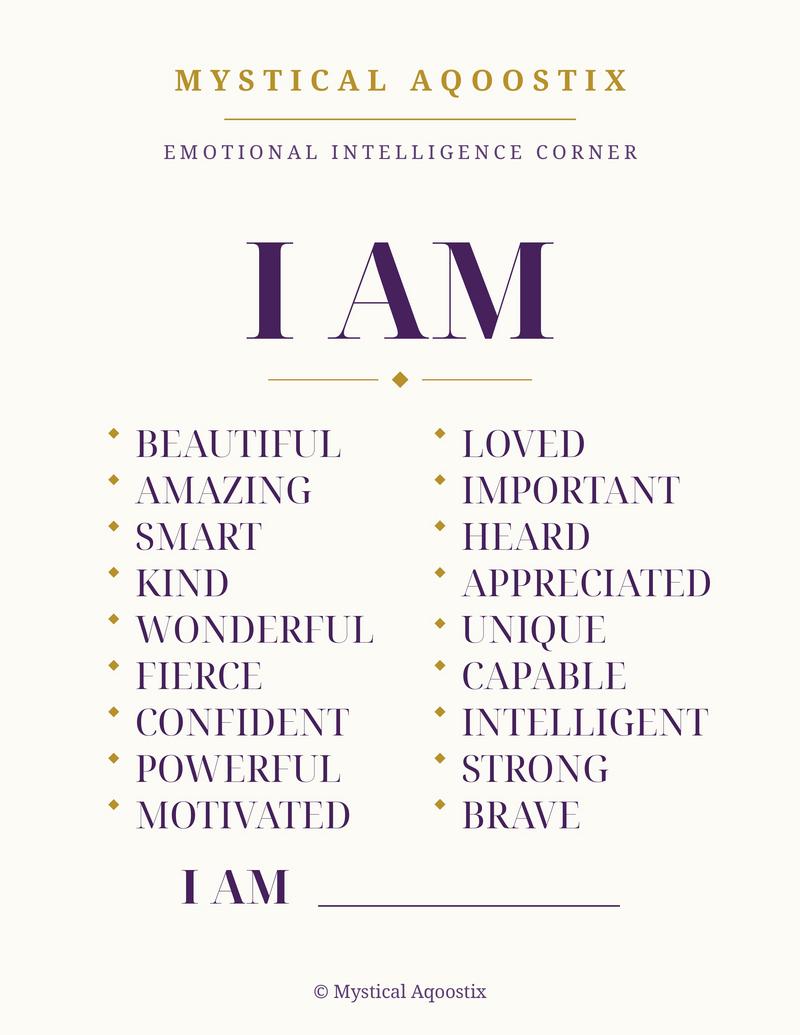
Self-Care starts with the words you speak to yourself. Here you'll find affirmations, mantras, and chants to remember.
What Are Affirmations?
Affirmations are positive statements you speak to yourself, on purpose, until you believe them and live them. See it, hear it, say it, until you know you know it!
How to Use Affirmations
You can say an affirmation anytime — they're a quick pick-me-up whenever you need one. You can use them anywhere and everywhere. At home, in the car, at work, standing in line, before a presentation. You don't have to say them out loud. You can think them quietly to yourself, and they still work. What matters is that you say them, and you mean them.
For Inspiration
- "I set the standard. It starts with me." — Monica Scarborough
- "It's your life. You're the only person that gets to say what goes on in it." — Iyanla Vanzant
- "I only want what wants me back." — Toni Jones
What "I Set the Standard" Means — You set the standard for how you allow people to treat you.
Please Remember — Affirmations are spiritual and educational practices, offered for your personal growth and well-being.
Affirmations to Live By
- I am calm, and I am clear.
- I am open to good things coming into my life.
- I am worthy of peace in my mind and in my home.
- I am learning, and I am growing, one day at a time.
- I am grateful for what I have, and for what is on its way.
- I am strong enough for today, and I am gentle with myself too.
- I am surrounded by people who care for me, and I care for them.
- I am choosing joy, even in small moments.
- I am trusting my own steps, and I am trusting my own timing.
- I am enough, just as I am, right here, right now.
- I am moving forward with hope in my heart.
- I am blessed, I am seen, and I am loved.
Emotional Intelligence Corner
For the Young and for the Not So Young
FOR THE YOUNG!: Miss Okra and The Butterbean, starting with Miss Okra Is Always Enough, by Monica Scarborough.
What is emotional intelligence? Emotional intelligence is noticing what you feel, naming it, understanding it.
Emotional intelligence, in parts:
- Notice what you feel.
- Name what you feel.
- Understand why you feel it.
- Calm and choose your response.
- Understand how others feel.
- Get along well with others.
Purpose of the Emotional Intelligence Corner
This corner is a place to learn and practice emotional intelligence, in simple steps, for children and adults.
For adults, too
This corner is not only for children. Adults use it at home, at work, and in relationships.
Why emotional intelligence is so important
Feelings affect the choices we make, our relationships, our health, and our daily life.
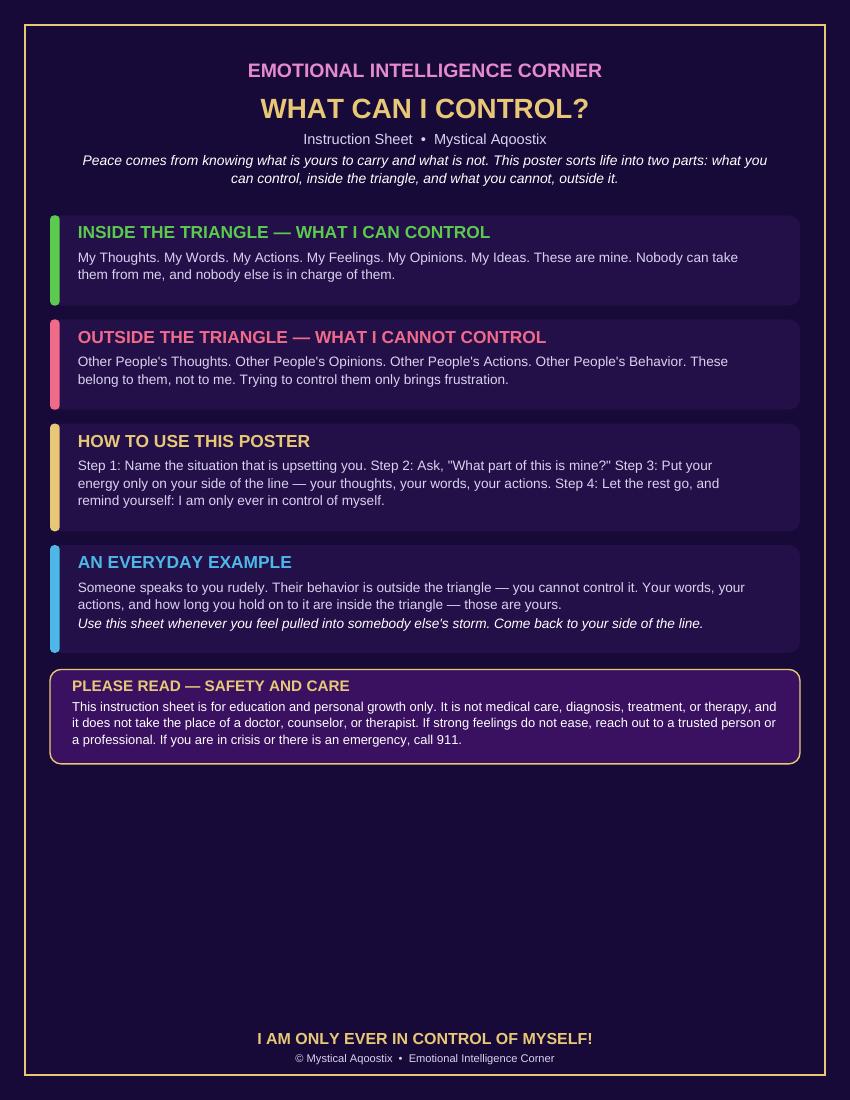
What Can I Control? — About this poster
This poster, in purple and gold, shows a triangle and a teardrop. How to use this poster, step by step:
- Look at the poster, and think of the situation.
- Say to yourself, in simple words, what you feel — for example, "I feel sad," "I feel angry."
- Look at the middle of the poster. These are yours: My Thoughts, My Words, My Actions, My Feelings.
- Look at the outside of the poster. These are not yours: Other People's Thoughts, Opinions, Actions.
- Ask yourself: What part of this situation can I control, right now? Choose one small, calm next step.
- Practice that one step, one time. Then notice how you feel afterward, and try again the next time.
Practice with children and adults, one step at a time.
Please note — Emotional Intelligence Corner disclaimer — The information in the Emotional Intelligence Corner is educational information only. It is not medical care.
The Children’s Side of the Corner
Emotional intelligence is for the young and for the not so young. Everything on this side of the Corner is about children, for children, or for the grown-ups who love them — the podcast, the app, the books, and a test for parents, all in one place.
 PODCAST · FOR CHILDREN
Wisdom Wednesdays with the Garden Babies
My Garden Babies — Miss Okra, The Butterbean, Sweet Pea, and Baby Pea.
A children’s podcast where the Garden Babies talk through the lesson together, the way children learn best — by hearing it, saying it, and living it out loud. Baby Pea is learning right along with your children, taught by his big sisters, so little listeners learn along too. Lessons in feelings, kindness, and the Tutnese alphabet, in the Garden Babies’ own voices.
New families: start with Lesson 1 and listen together, then talk about it — what did you feel, and what can you control?
THE APP · FOR CHILDREN & FAMILIES
The Emotional Intelligence Mall
The Mall is where the Corner’s learning lives in one place — feelings practice, games, and tools children and families can open and use together, at home and on the go.
Bring the poster to life: practice naming a feeling, sorting what is yours to control and what is not, and choosing one small, calm next step.
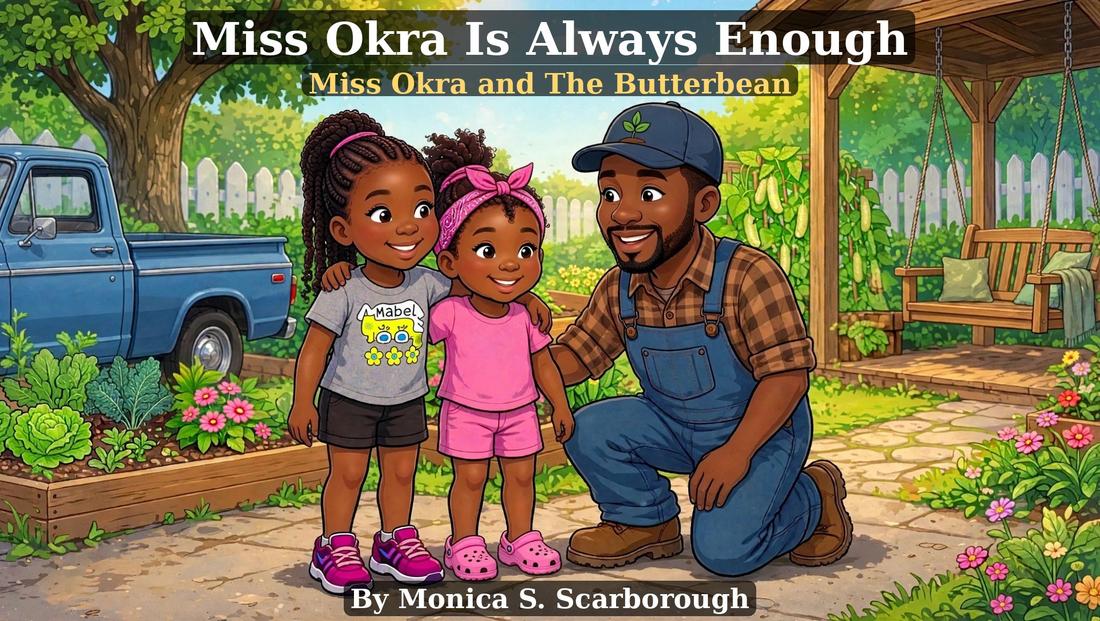 CHILDREN’S BOOKS
Miss Okra and The Butterbean
Stories by Monica Scarborough, from her own grandchildren — Miss Okra and The Butterbean.
Start with Miss Okra Is Always Enough — a story for the child who feels left out or not quite enough, and for every brother and sister learning that there is room for everybody to be loved.
Buy Miss Okra Is Always Enough — $6.99
The book also lives in the Mystical Library, in the Mystical Marketplace.
How Is My Child’s Emotional Intelligence Growing?
A Mystical Aqoostix test for parents and grandparents, from Rev. Monica Scarborough’s Emotional Intelligence teaching.
You answer about your child — what you see at home, on ordinary days. There are no wrong feelings and no failing grade here. Feelings are information. This test simply shows you where your child is growing, and where a little practice will help, using the same steps we teach in this Corner: notice it, name it, understand it, calm and choose — and remember to ask, What can I control?
For each sentence, choose the answer that sounds most like your child most of the time: Not Yet, Sometimes, Often, or Most of the Time.
Your child’s growing, step by step:
Keep growing together: listen to Wisdom Wednesdays with the Garden Babies, practice in the Emotional Intelligence Mall, and read Miss Okra Is Always Enough together — then take this test again in a few months and watch what has grown.
This test is a Mystical Aqoostix teaching tool for parents — educational information to help you see and support your child’s growth. It is not medical care, not a diagnosis, and not a label for your child. Every child grows in their own time. If you are worried about your child, talk with their doctor or counselor.
My Blog
The Weight of Words Without Change
We've all said it—'I'm sorry'—in moments when regret swells in our chest after a harsh word, a broken promise, or a moment of emotional absence. But how often does that phrase become a release valve, a way to ease our own discomfort without altering the pattern? When apologies aren’t followed by transformation, they risk becoming rituals of convenience rather than catalysts for repair. In intimate spaces like family homes in Jackson or Biloxi, where emotional rhythms are felt deeply and remembered longer, a hollow 'sorry' can do more harm than silence. It offers the appearance of accountability while leaving the wound untouched.
Psychological research consistently shows that trust rebuilds not through declarations, but through observable change. Dr. Harriet Lerner, a renowned family therapist, emphasizes that 'a real apology includes a behavioral change'—without it, the message received is not remorse, but repetition. When parents apologize to children for yelling, yet continue the cycle during stress, the child learns that words are unreliable. When partners repeatedly say 'I’ll do better,' but show no shift in attention or effort, emotional distance grows.
The danger isn’t in the failure to be perfect—it’s in mistaking verbal amends for actual repair. True accountability lives in the daily choice to do differently: arriving home on time after missing dinner, pausing before reacting in anger, or following through on a commitment without being reminded. These aren’t grand gestures; they’re the quiet accumulation of integrity.
In wellness communities and spiritual practices rooted in authenticity, this consistency is sacred. It reflects a deeper alignment between inner values and outer actions. Healing begins not when we speak the apology, but when we live beyond it.
Why Apologies Fail Without Behavioral Shift
An apology without change isn’t just ineffective—it can be damaging. When repeated, it teaches those around us that words are expendable and promises are conditional. In family systems, this erodes emotional safety, particularly for children and adolescents who are shaping their worldview based on relational patterns.
Consider the parent who apologizes for missing a child’s school performance due to work, then continues prioritizing job demands over future events. The initial apology may offer temporary relief to the parent, but the child experiences inconsistency—love expressed in words, but not in presence. Over time, this creates attachment insecurity, where the child learns to emotionally withdraw as protection.
Similarly, in adult relationships, whether romantic or familial, repeated apologies without change foster what psychologists call 'apology fatigue'—a state where the receiver stops believing in the possibility of difference. Their emotional energy shifts from hoping for repair to bracing for disappointment.
This dynamic is especially concerning in households where emotional transparency is valued, such as in Gulf Coast communities where intergenerational connection remains strong. There, authenticity isn’t a trend—it’s a way of life. When apologies are used to maintain surface peace rather than address real ruptures, the cost is high: diminished trust, suppressed feelings, and fractured intimacy.
True healing requires more than language. It demands self-awareness, humility, and the courage to face personal limitations. It involves asking: What triggers this pattern? What do I gain from this behavior, even if it harms others? What support do I need to change? Answering these questions—whether through journaling, therapy, or spiritual reflection—creates the foundation for genuine repair.
The Everyday Practice of Meaningful Amends
Repair doesn’t require dramatic overhauls. In truth, it’s built through small, consistent acts that signal a new way of showing up. For families navigating emotional challenges, these practices create a living apology—one that speaks louder than words.
- Repair After Rupture
When a harsh word is spoken or an expectation unmet, pause. Reflect on the impact, not intent. Return with specificity: *"I was wrong when I dismissed your feelings yesterday—it minimized your experience, and I take full responsibility. Going forward, I’ll listen first." - Follow Through with Action
Apologies about reliability demand new patterns. If you apologized for missing a family event, use calendar alerts, set earlier reminders, and communicate proactively when conflicts arise. - Model Emotional Regulation
For parents or caregivers, apologizing for emotional outbursts must be paired with visible self-regulation practices—naming anger before it escalates, taking breaths, stepping away to cool down. Children learn more from these actions than from any verbal correction. - Create Feedback Loops
Ask for input: "Did my actions this week show you I’m trying to change?" This opens space for dialogue and demonstrates humility.
In holistic wellness circles, this consistency reflects spiritual integrity—aligning mind, body, and action. It’s not about perfection, but about presence.
Rebuilding Trust Through Consistent Presence
Trust isn’t rebuilt in a single conversation. It grows slowly, like moss on stone, shaped by repeated experiences of reliability. When someone has been hurt by broken promises or emotional neglect, they don’t need more words—they need proof.
That proof comes in the form of:
- Showing up on time, consistently
- Following through without being reminded
- Regulating emotions in charged moments
- Acknowledging progress and setbacks with honesty
In spiritual communities and healing-centered homes, this is known as 'walking the talk.' It’s the quiet power of integrity—choosing to do differently, not because it’s easy, but because it honors the relationships that matter most.
Healing isn’t found in the perfect apology. It’s found in the choosing—to listen, to adjust, to show up again with more awareness than before. That’s where real change begins.
Unlock the Power of Your Subconscious Mind
What if you could rewrite the hidden scripts driving your habits, emotions, and self-belief? The subconscious mind—the silent architect behind your automatic thoughts and behaviors—holds the key to profound personal transformation. While many assume these deep-seated patterns are fixed, neuroscience and holistic practices confirm they can be reshaped with consistent, intentional input. Individuals across the wellness community are discovering practical ways to reprogram limiting beliefs, reduce anxiety, and align their inner world with their true desires.
This shift isn’t about willpower—it’s about working with the brain’s natural plasticity. By leveraging techniques like visualization, affirmations, and vibrational tools, you can gently rewire neural pathways that have operated beneath awareness for years. The process mirrors software updates for the mind: small, repeated inputs lead to lasting upgrades in confidence, resilience, and emotional freedom.
Whether you're navigating life transitions, seeking greater peace, or striving for personal growth, understanding how to communicate effectively with your subconscious opens doors to a more empowered life. And with modern tools making these practices more accessible than ever, transformation can begin in just minutes a day—from any space where you feel grounded.
How Sound Frequencies and Mindfulness Support Subconscious Reprogramming
The subconscious mind absorbs information best when the conscious, critical brain is relaxed—a state often reached through mindfulness and specific sound frequencies. These tools don’t override your mind; they create optimal conditions for change by shifting brainwave activity into receptive states. For example:
- Theta waves (4–8 Hz) occur during light sleep and deep meditation, making them ideal for introducing new beliefs while old thought loops soften.
- Alpha waves (8–14 Hz) promote calm focus, helping you absorb affirmations without mental resistance.
- Delta waves (0.5–4 Hz) support deep healing and emotional release, particularly valuable for resolving subconscious trauma.
When paired with mindfulness practices—such as breath awareness or body scanning—these frequencies guide the mind into a state where transformation becomes effortless. Instead of fighting ingrained patterns, you’re simply introducing new ones in an environment where the subconscious is naturally receptive.
This synergy is why sound-based healing has become a cornerstone of modern holistic wellness. Whether using binaural beats, solfeggio tones, or harmonic resonance, the goal remains the same: to quiet mental noise and open a direct channel to the subconscious.
7 Science-Backed Strategies to Reprogram Your Mind
Lasting change begins not with force, but with repetition, resonance, and rhythm. These seven evidence-aligned strategies help you communicate effectively with your subconscious, turning intention into internal reality:
- Daily Affirmations with Emotional Engagement
Repeat positive statements in the present tense—such as "I am confident" or "I release fear easily"—while feeling their truth. Emotion amplifies the message, signaling to the subconscious that this is important. - Guided Visualization Sessions
Spend 5–10 minutes daily imagining your desired outcome in vivid detail. Engage all five senses to deepen the impression on your subconscious mind. - Journaling Before Sleep
Write down empowering beliefs or goals just before bed, when theta brainwave activity increases. This primes the subconscious for reprogramming during rest. - Consistent Morning Routines
Start your day with intention—meditation, gratitude, or breathwork—to set a receptive tone before the conscious mind becomes busy with external demands. - Environmental Anchors
Place visual reminders (sticky notes, symbols, or artwork) in your surroundings that reflect your desired mindset, reinforcing new beliefs throughout the day. - Repetition with Variation
Revisit key messages regularly, but vary the format—audio, writing, speaking aloud—to strengthen neural pathways through multiple channels. - Sound-Based Mind States
Use frequency-driven audio, such as binaural beats or harmonic tones, to naturally shift brain activity into states where reprogramming is most effective.
A Step-by-Step Guide to Reprogramming Your Inner World
You don’t need years of practice to begin reshaping your subconscious. With a structured, compassionate approach, meaningful shifts can begin in days. Follow these steps to start your journey:
- Identify One Limiting Belief
Notice a recurring thought that holds you back—such as "I’m not good enough" or "I always fail at relationships." Acknowledge it without judgment; awareness is the first step to change. - Craft a New Empowering Belief
Flip the limiting thought into a positive, believable truth. For example: "I am growing in confidence every day." - Choose a Daily Practice Window
Pick a consistent 10-minute window—morning or night—when you’re relaxed and free from distractions. - Engage Through Multiple Senses
Speak your new belief aloud, write it down three times, and visualize yourself living it. This multi-sensory input strengthens the message. - Pair with a Calm State
Use deep breathing or soft music to calm your nervous system before repeating your affirmation. A relaxed mind absorbs change more easily. - Track Subtle Shifts
After a week, reflect: Are certain triggers less intense? Do you respond differently to stress? Small shifts signal progress. - Integrate Into Lifestyle
Gradually layer in additional tools—like guided sessions or sound frequencies—to deepen your practice over time.
Common Questions About Subconscious Reprogramming—Answered
How long does it take to rewire the subconscious?
While experiences vary, many notice subtle shifts within 2–3 weeks of consistent daily practice. Lasting change typically strengthens over 30–90 days, as new neural pathways become dominant.
Can I reprogram my subconscious while sleeping?
Yes. Playing affirmations or frequency-based audio during sleep—especially in the early morning hours when REM cycles increase—can support deep reprogramming.
What if I don’t believe the affirmations at first?
That’s normal. Repetition builds familiarity, and familiarity builds belief. Start with statements that feel almost true, then gradually shift to more empowering ones.
Is this similar to hypnosis?
In many ways, yes. Both work by accessing the subconscious during relaxed states. However, self-directed reprogramming empowers you to lead the process without external guidance.
Do I need special tools or apps?
While not required, tools like meditation apps, sound therapies, or audio journeys can enhance consistency and effectiveness—especially for beginners.
Begin Your Inner Transformation Today
Rewiring your subconscious mind isn’t about becoming someone new—it’s about uncovering who you’ve always been beneath the layers of conditioning. Every thought you repeat, every emotion you lean into, and every practice you commit to sends a signal to your inner world: change is possible.
Introducing "Rewiring Your Subconscious Mind", a transformative app by Mystical Aqoostix designed to support your journey of subconscious reprogramming through intentional sound healing and guided mindfulness. Rooted in metaphysics and holistic wellness, this app combines science-backed audio frequencies with nurturing guidance to help you release limiting beliefs, elevate your energy, and embody deeper states of peace.
With personalized journeys, adaptive soundscapes, and daily practices crafted in a nurturing tone, "Rewiring Your Subconscious Mind" makes inner work accessible, intuitive, and sustainable. Whether you're new to mindfulness or deepening an existing practice, this app serves as a gentle companion on your path to healing and empowerment.
Your journey to inner alignment begins now. Take the first step with courage, and trust that every effort is rewiring your life toward greater peace, power, and purpose.
A Story of Love, Sibling Jealousy, and Emotional Growth
Sibling jealousy is a common experience in many families, yet young children often lack the words to express what's happening inside them. They may wonder if they're just as special, just as important, or just as loved. These quiet doubts can lead to acting out, withdrawal, or conflict—especially when one child receives something special and another feels left behind.
This is where emotional intelligence begins. Children don't need to suppress their feelings; they need tools to understand them. With guidance, they can learn that love isn't a competition—that each of them is seen, valued, and deeply loved in their own unique way.
Miss Okra Is Always Enough: Miss Okra and The Butterbean is a heartwarming children's book designed to open meaningful conversations about these feelings. Written and illustrated by Monica S. Scarborough, this story gently follows two sisters as they navigate the complex emotions that arise when one receives a gift. With the loving guidance of their father, they learn how to express jealousy, sadness, and insecurity without acting on them in hurtful ways.
How This Book Supports Emotional Intelligence in Children
Emotional intelligence isn't just for adults—children develop it through stories, play, and everyday experiences. Miss Okra Is Always Enough introduces key emotional skills in a way that's accessible and affirming for young readers:
- Emotional Awareness: The story helps children identify and name complex feelings like jealousy and disappointment. Seeing characters express these emotions validates the child’s own experiences.
- Empathy Development: Through dialogue and interaction, children learn to consider their sibling’s perspective, fostering compassion over competition.
- Healthy Communication: The father in the story models how to guide children through emotional moments with patience, active listening, and affirming language.
- Positive Affirmations: At the heart of the book are three powerful messages every child needs to hear: I am loved. I am seen. I am always enough. These phrases build self-worth and emotional resilience.
For parents, this book is more than a story—it's a tool for connection. It creates space for honest conversations about feelings, sibling relationships, and self-worth, aligning with holistic, mindfulness-based parenting practices.
How Miss Okra Helps Parents Guide Emotional Conversations
One of the biggest challenges parents face is finding the right words to explain complex emotions like jealousy to younger children. Miss Okra Is Always Enough makes this easier by offering a gentle, relatable story that opens the door to meaningful discussion. Instead of lecturing or correcting behavior, parents can read the book with their child and use it as a natural springboard for conversation.
The story models how a caring adult—Miss Okra's father—guides his daughters with empathy, asking open-ended questions and helping them name what they're feeling. This realistic example gives parents a clear, compassionate framework to follow at home. After reading, you might ask:
- "How do you think Miss Okra felt when The Butterbean got new shoes?"
- "Have you ever felt like that before?"
- "What could help you feel better next time you feel left out?"
These simple prompts help children process emotions with support rather than shame. Many parents in wellness-focused communities like Gulfport and Biloxi have shared that this book gave them the language they didn’t know how to find—helping them move from managing tantrums to building emotional understanding.
By reading together, parents don’t just teach a lesson—they create connection. The book becomes a shared experience, a safe way to talk about hard feelings, and a nightly ritual that reinforces love and belonging.
Frequently Asked Questions About Sibling Jealousy and Emotional Growth
Why do children struggle to talk about sibling jealousy?
Young children often lack the vocabulary to express complex emotions. They may feel jealous but not know how to say it without fear of getting in trouble. Stories like Miss Okra Is Always Enough give them a safe way to explore these feelings.
How can I help my child feel loved without comparison?
Focus on individual affirmations. Say things like, "I love how thoughtful you are," rather than comparing siblings. Remind them daily: You are loved. You are seen. I am always enough.
Is it okay for my child to feel jealous?
Yes. Jealousy is a natural emotion. What matters is how we respond to it. Help your child name the feeling and talk about it—don’t punish the emotion.
Can a children’s book really make a difference in emotional development?
Absolutely. Stories are powerful teaching tools. When children see their emotions reflected in characters, it builds emotional literacy and encourages healthy expression.
How can I get my child to open up about their feelings?
Use the book as a conversation starter. Ask: "How do you think Miss Okra felt when she saw her sister’s gift?" or "Have you ever felt that way?" This invites sharing without pressure.
Where can I find resources to support emotional growth at home?
Families can benefit from Mystical Aqoostix, local wellness centers, parenting workshops, and mindfulness programs that support holistic child development.
The Power of a Story That Says 'You Are Enough'
In a world where children are often measured by achievements, appearances, or comparisons, Miss Okra Is Always Enough offers a powerful counter-narrative: your worth is not earned—you are inherently enough, just as you are.
This book is a gift—not just for children, but for families seeking deeper connection, understanding, and emotional growth. Whether you’re navigating the early years of siblinghood or supporting older children through complex emotions, this story offers a gentle, affirming guide.
Parents will praise it for opening discussions that were once difficult. Teachers and counselors will use it to support social-emotional learning. And children can to it again and again, comforted by its truth.
If you’re ready to bring this message into your home, classroom, or community, we invite you to discover Miss Okra Is Always Enough: Miss Okra and The Butterbean.
📚 Discover the Book & Share the Message
Written and illustrated by Monica S. Scarborough
🔗 Buy Now — Miss Okra Is Always Enough, $6.99
What It Feels Like When Emotions Guide Your Choices
Imagine you’re stuck in traffic, already late for an important meeting, and your heart starts racing. Or your child throws a tantrum in the grocery store and every instinct tells you to raise your voice. In moments like these, emotional intelligence isn’t about grand gestures—it’s the quiet inner shift that keeps you grounded. It’s recognizing your frustration without reacting, understanding what your child truly needs, and choosing a response that calms instead of escalates.
Emotional intelligence is your ability to notice your own emotions and those of others, then use that awareness to make thoughtful decisions. It’s not about suppressing feelings or being “too nice”—it’s about being aware, in control, and intentional. Whether you're navigating workplace stress, resolving family tensions, or managing daily interactions in cities like Seattle, Denver, or Atlanta, emotional intelligence shapes how smoothly life unfolds.
In this guide, you’ll learn how to strengthen this skill through practical, everyday strategies. From identifying emotional triggers to responding with clarity instead of reaction, you’ll discover how small shifts in awareness lead to greater confidence, stronger relationships, and personal resilience. This isn’t just feel-good advice—it’s foundational for lasting well-being in any environment.
Why Emotional Intelligence Was Missing From Your Upbringing
Most adults today weren’t taught emotional intelligence (EI) as children—not because it wasn’t important, but because past generations prioritized discipline, obedience, and emotional restraint over self-awareness and expression. In many households across the U.S.—from suburban neighborhoods in Atlanta to rural communities in the Midwest—feelings were often suppressed rather than explored. Parents, shaped by their own upbringing, equated emotional control with strength, unintentionally passing down a disconnect between emotion and behavior.
This historical gap in emotional education has lasting ripple effects. Families now struggle with miscommunication, difficulty regulating stress, and challenges in modeling healthy relationship dynamics. Without foundational EI skills—like identifying emotions, practicing empathy, or managing conflict constructively—parents may inadvertently repeat cycles of emotional avoidance with their own children.
The good news? Emotional intelligence can be learned at any age. By integrating simple, everyday practices—such as naming feelings aloud, actively listening during disagreements, or pausing before reacting—families can begin closing this gap. Schools in cities like Portland and Denver are already incorporating social-emotional learning into curricula, signaling a cultural shift.
You don’t need a therapy degree to build EI. Start with small, intentional steps at home:
- Label emotions during tense moments (“I notice I’m feeling frustrated—how about you?”)
- Practice reflective listening with family members
- Create space for emotion-focused conversations during routines
Healing begins with awareness—and every conversation builds a new pathway toward emotional fluency.
6 Ways Low Emotional Intelligence Affects Children’s Development
Children who lack strong emotional intelligence (EI) often face challenges that ripple through their academic, social, and personal lives. Without the tools to recognize, understand, and manage their emotions, young individuals may struggle to navigate everyday interactions and developmental milestones.
- Mimicking Unhealthy Parental Reactions
When caregivers respond to stress with anger or withdrawal, children often adopt these patterns as default behaviors. A child may yell when frustrated or shut down during conflict, not because they’re inherently reactive, but because they’ve learned these are the acceptable ways to express emotion. - Academic Struggles Due to Poor Self-Regulation
Emotional distractions can severely impact concentration and memory retention. A student overwhelmed by anxiety or unresolved anger may find it hard to focus in classrooms across Portland, Denver, or Atlanta, leading to incomplete assignments and underperformance despite intellectual capability. - Difficulty Building and Maintaining Friendships
Kids with low EI may misread social cues, struggle to empathize, or react disproportionately during peer interactions. This can lead to social isolation or frequent conflicts, making it harder to form the meaningful connections essential for healthy development. - Increased Behavioral Issues at School
Without emotional awareness, minor frustrations can escalate into outbursts or defiance. Teachers in urban and suburban districts alike often report that students lacking EI skills are more likely to require disciplinary action, not out of rebellion, but from an inability to process feelings constructively. - Lower Resilience in Challenging Situations
Children with underdeveloped emotional intelligence may give up easily when faced with obstacles. Whether it’s a tough math problem or a disagreement on the playground, they lack the internal strategies to cope, persist, or seek help effectively. - Long-Term Impact on Self-Esteem
Repeated social or academic setbacks can erode confidence. A child who constantly misunderstands emotions—their own or others’—may begin to see themselves as “different” or “flawed,” creating a negative self-narrative that persists into adolescence and beyond.
Building emotional intelligence early creates a foundation for healthier relationships, improved learning outcomes, and greater overall well-being.
Simple Steps to Build Emotional Intelligence Every Adult Can Practice
Developing emotional intelligence (EI) is a powerful way to improve relationships, manage stress, and lead with greater empathy—especially valuable in fast-paced cities like Seattle, Denver, and Atlanta where daily demands can overwhelm even the most resilient. The good news? EI isn’t a fixed trait—you can strengthen it with intentional, everyday practices.
- Pause Before Reacting
When emotions run high, create a 10-second mental reset. Stop, breathe deeply, and delay your response. This brief pause disrupts automatic reactions and activates the prefrontal cortex, helping you respond thoughtfully instead of impulsively. - Name What You’re Feeling
Use precise emotional language: instead of “I’m stressed,” try “I’m feeling overwhelmed” or “frustrated.” Labeling emotions accurately increases self-awareness and reduces their intensity, a technique rooted in affect labeling theory. - Practice Reflective Listening
In conversations, focus fully on the speaker without planning your reply. Reflect back what you hear: “It sounds like you’re feeling…” This builds trust and sharpens your emotional perception. - Model Healthy Behavior for Kids
Children absorb emotional cues from adults. Narrate your feelings aloud in calm moments: “I’m taking deep breaths because I felt annoyed.” This normalizes emotional expression and teaches regulation. - Journal Regularly
Write about daily emotional experiences—what triggered you, how you responded, and what you’d do differently. Over time, this reveals patterns and tracks growth.
Consistency matters more than intensity. Even five minutes a day builds lasting emotional awareness that benefits both personal and professional life.
How Movies Reveal the Power of Emotional Intelligence in Everyday Life
Popular films serve as powerful mirrors for understanding emotional intelligence (EI), translating complex inner experiences into relatable stories. Few examples illustrate this better than Pixar’s Inside Out, where the emotional journey of a young hockey player adjusting to life in a new city becomes a masterclass in recognizing, processing, and honoring feelings. Unlike traditional narratives that prioritize external conflict, this film dives deep into the internal landscape—showcasing how emotions like Joy, Sadness, and Fear each play a critical role in decision-making, resilience, and connection.
When compared to other family-centered films that rely on humor or action to drive engagement, Inside Out stands apart by centering emotional literacy as the core mechanism for growth. While many movies show characters overcoming obstacles through bravery or cleverness, this one emphasizes emotional regulation, self-awareness, and empathy as the true catalysts for healing and adaptation.
- Inside Out: Focuses on internal emotional systems, validating all feelings—including sadness—as essential to well-being
- Typical children’s films: Often depict emotion suppression or humor-based coping, reinforcing avoidance over processing
- EI-forward storytelling: Encourages viewers in cities like Portland, Denver, and Atlanta to name their emotions and seek support
This contrast helps audiences—especially parents and educators—recognize the value of teaching emotional fluency early. By framing emotional intelligence as a skill rather than a trait, such films empower families to practice active listening, model vulnerability, and foster safer emotional environments at home and in community settings.
Your Emotional Intelligence FAQs—Answered
Can I develop emotional intelligence as an adult?
Absolutely. Emotional intelligence (EI) isn’t a fixed trait—it’s a set of skills that can be cultivated at any age. Adults can enhance self-awareness, self-regulation, empathy, and social skills through intentional practice, mindfulness, and feedback. Many professionals in cities like Portland, Denver, and Atlanta integrate EI training into personal development routines with measurable results.
How do I teach emotional intelligence to my kids?
Modeling is key. Start by naming emotions in everyday situations and encouraging expression without judgment. Use real-life moments—like disagreements or setbacks—to teach empathy and problem-solving. Simple tools like a family “feelings chart” or daily check-ins create emotional literacy from an early age.
Is emotional intelligence more important than IQ?
While IQ supports cognitive tasks, EI drives relationship success, leadership effectiveness, and resilience. In personal and professional settings—especially in high-stress environments—those with strong EI often outperform peers, even with similar technical skills.
Can emotional intelligence improve my relationships?
Yes. High EI enhances active listening, conflict de-escalation, and mutual understanding. Practicing perspective-taking and managing emotional reactivity fosters deeper connections, whether with partners, family, or coworkers.
Are there practical daily exercises to boost EI?
Try these:
- Journal for 5 minutes daily, reflecting on emotional triggers
- Practice deep listening in conversations—respond instead of reacting
- Use breathing techniques to pause before responding emotionally
- Seek feedback on how others perceive your emotional responses
Building EI takes consistency, but small shifts lead to significant improvements over time.
Begin Your Emotional Intelligence Journey Today
Emotional intelligence isn’t a fixed trait—it’s a skill you can cultivate, no matter where you are in life. As you’ve discovered throughout this guide, tuning into your emotions, understanding their roots, and responding with intention creates a ripple effect across your relationships, decision-making, and overall well-being. The journey begins not with grand gestures, but with small, consistent actions that build awareness and resilience over time.
Start by pausing each day to check in with yourself. Ask: What am I feeling right now? What might be triggering this? Even two minutes of mindful reflection can deepen self-awareness. Practice active listening in conversations—focus fully on the other person without planning your reply. This builds empathy, a cornerstone of emotional intelligence.
Keep a journal to track emotional patterns, especially in high-stress moments. Over time, you’ll begin to notice triggers and make conscious choices rather than reactive ones. If you're in cities like Portland, Denver, or Atlanta, consider joining local mindfulness groups or wellness circles to stay accountable and supported.
Remember, growth isn’t linear. There’s no deadline, and no one is too far behind. Every moment is an opportunity to reconnect, heal, and grow. Take the first step today—your future self will thank you.
Unlock the Hidden Power of Your Mind for Lasting Healing
Deep healing goes beyond surface-level relief—it’s about accessing the root of emotional blockages, releasing stored trauma, and rewiring long-held patterns that no longer serve you. One of the most effective pathways to this level of transformation is hypnotherapy, a clinically recognized practice that guides the mind into a naturally occurring state of deep focus and heightened suggestibility. Far from the myths portrayed in entertainment, modern hypnotherapy is a science-backed modality used by wellness seekers across cities like Portland, Denver, and Atlanta to achieve breakthroughs in anxiety management, habit change, and emotional resilience.
In this state of relaxed awareness—often compared to the moments just before sleep—your subconscious becomes accessible, allowing for profound reprogramming. Whether you're overcoming chronic stress, seeking clarity, or striving for personal growth, hypnotherapy supports you in replacing limiting beliefs with empowering ones. It’s not about losing control; it’s about gaining deeper insight and alignment between your conscious goals and unconscious habits.
Throughout this guide, you’ll learn how hypnotherapy fosters holistic wellness, the science behind its effectiveness, practical steps to begin your journey, and how to integrate sessions into your self-care routine—whether in person or at home. Discover how this gentle, non-invasive tool is helping thousands tap into their innate capacity for healing and transformation.
Step-by-Step: How Hypnotherapy Unlocks Deep Healing
Hypnotherapy is a powerful tool for accessing the subconscious mind, where long-held beliefs, emotional patterns, and behavioral roots reside. When approached with intention, it becomes a structured journey toward lasting personal transformation.
- Induce Deep Relaxation (Trance State)
Begin by settling into a quiet, comfortable space—whether in a wellness studio or private setting. Through guided breathwork and progressive muscle relaxation, a trained practitioner helps slow brainwave activity, transitioning from waking beta waves to the deeply receptive alpha and theta states. This isn’t sleep; it’s focused awareness, similar to being absorbed in meditation or lost in thought while driving. - Access the Subconscious Mind
Once in a trance, the analytical conscious mind steps back, allowing direct communication with the subconscious. This is where core beliefs about self-worth, health, and habit patterns live. Using calming verbal cues and imagery, the therapist navigates beneath surface-level thoughts to identify emotional triggers or unresolved experiences—often formed in childhood or during past stressful events. - Reframe and Replace Limiting Beliefs
With the subconscious now accessible, the therapist introduces tailored, positive affirmations or metaphors aligned with the client’s goals—such as releasing fear, building confidence, or letting go of pain. These suggestions are embedded using emotional resonance and repetition, reinforcing new neural pathways.
Best Practice Tip: Consistency enhances results. Many clients in cities like Portland, Denver, and Atlanta report deeper shifts after multiple sessions, especially when combined with at-home mindfulness or journaling. Always ensure your practitioner uses ethical, client-centered techniques to support sustainable healing.
5 Transformative Benefits of Hypnotherapy for Deep Healing Journeys
Hypnotherapy has evolved into a powerful tool for profound personal transformation, helping individuals access the subconscious mind to release old patterns and embrace new ways of being. Backed by both ancient wisdom and modern psychological insight, this modality supports healing that goes far beyond surface-level change. Whether you're exploring holistic care in cities like Seattle, Atlanta, or Boulder, or seeking inner clarity from a quiet rural setting, hypnotherapy offers measurable, lasting benefits.
- Stress Reduction Through Subconscious Reprogramming
Hypnotherapy induces a deeply relaxed state, allowing the nervous system to shift from chronic fight-or-flight mode into rest-and-digest activation. By accessing the subconscious, clients release deeply held tension and replace anxious thought loops with calming, empowering suggestions tailored to their personal needs. - Lasting Behavior Change
From smoking cessation to improved sleep hygiene, hypnotherapy works by redefining internal beliefs that drive habits. Unlike willpower-based methods, it targets the root cause of repetitive behaviors, making change feel natural and sustainable over time. - Emotional Healing and Trauma Release
Past emotional wounds often remain stored in the subconscious, affecting present-day relationships and self-perception. Hypnotherapy provides a safe space to process suppressed feelings, helping clients reframe negative memories and reclaim personal power. - Improved Mental Focus and Clarity
Regular sessions enhance cognitive function by clearing mental fog and strengthening neural pathways associated with concentration. This makes hypnotherapy especially beneficial for creatives, professionals, and students seeking greater presence and productivity. - Spiritual Insight and Inner Alignment
Beyond psychological healing, hypnotherapy can facilitate transcendent experiences—such as past-life explorations or connection to higher self—deepening one’s sense of purpose and spiritual grounding.
The Science of Surrender: How Hypnotherapy Activates Deep Healing States
Hypnotherapy works by guiding the mind into altered states of consciousness where healing becomes not only possible—but amplified. At its core, this modality leverages the natural rhythms of brainwave activity, gently transitioning the brain from the alert beta state into deeper alpha and theta waves, where intuition, memory, and subconscious reprogramming thrive. These low-frequency states mirror those experienced during meditation or just before falling asleep, allowing access to the inner landscape where emotional patterns, limiting beliefs, and unresolved trauma reside.
In these receptive mental spaces, the connection between mind and body becomes more apparent. The nervous system softens its defenses, reducing cortisol output and creating optimal conditions for cellular repair and emotional release. Practitioners use focused suggestion, breathwork, and imagery to support shifts at the neurological level, helping individuals reframe experiences, release phobias, or break cycles of chronic stress—especially valuable for those navigating high-pressure urban environments like Seattle, Denver, or Atlanta.
Key practices include:
- Using progressive relaxation to shift brainwave patterns
- Employing personalized verbal cues to access subconscious layers
- Reinforcing positive neural pathways through repetition and visualization
This science-backed journey inward respects the body’s innate wisdom, making hypnotherapy a powerful tool for holistic transformation when aligned with intention and consistency.
Your Questions About Hypnotherapy Answered: Safety, Effectiveness, and Who It’s For
Is hypnotherapy safe for everyone?
Yes, hypnotherapy is widely considered a safe, non-invasive practice when conducted by trained professionals. You remain fully aware and in control throughout the session, simply guided into a deeply relaxed, focused state. Contrary to myths, you cannot “get stuck” in hypnosis—your mind naturally surfaces when the session ends or if you choose to. It's suitable for most adults and increasingly used with children and teens for issues like test anxiety or sleep challenges, especially in holistic wellness centers across cities like Seattle, Denver, and Atlanta.
How effective is hypnotherapy for real change?
Studies and clinical experience show hypnotherapy can be highly effective for behavior modification, stress reduction, and emotional healing. It works by accessing the subconscious mind, where deeply held beliefs and automatic patterns reside. This makes it especially powerful for breaking cycles of anxiety, phobias, or self-sabotage. Results vary based on individual responsiveness and commitment to the process.
How many sessions are typically needed?
Most clients begin with 4–8 sessions, spaced weekly or biweekly. Some concerns, like smoking cessation or acute stress, may resolve in just 1–3 visits. Chronic patterns often require more time to reprogram.
Who benefits most from hypnotherapy?
Ideal candidates include those seeking relief from anxiety, insomnia, low self-esteem, or habit change. It’s also valuable for pain management, performance enhancement, and emotional resilience.
Are there any risks or contraindications?
Individuals with severe psychiatric conditions like psychosis should consult a mental health provider first. Otherwise, risks are minimal.
Begin Your Hypnotherapy Journey with Confidence and Clarity
Hypnotherapy is a powerful tool for unlocking deep emotional healing, reshaping limiting beliefs, and aligning the subconscious mind with your true intentions. As you’ve learned throughout this guide, this evidence-supported modality goes far beyond relaxation—it accesses the fertile ground of the unconscious, where long-held patterns, traumas, and self-narratives reside. Whether you're exploring inner work in vibrant wellness communities like Seattle, Denver, or Portland, or pursuing personal growth from a quiet rural setting, integrating hypnotherapy into your holistic wellness routine can lead to profound transformation.
To begin, start with intention: reflect on what you’d like to heal, release, or cultivate—be it self-confidence, emotional resilience, or freedom from chronic stress. Seek a qualified hypnotherapist by verifying credentials such as certification from accredited hypnotherapy schools and adherence to ethical standards. Many practitioners offer virtual sessions, making it easier than ever to connect with specialists regardless of location.
Begin your journey with one-on-one sessions focused on your specific goals, then consider supplementing with self-hypnosis techniques learned in guided practice. Pair your work with complementary modalities like meditation, breathwork, or sound healing to deepen results. Remember, consistency and openness are key—progress unfolds at its own pace. Take the first step today, and embrace hypnotherapy as a trusted companion on your path to lasting inner harmony.
Feel the Frequency: How Sound Can Rebalance Your Entire Being
Imagine standing beside a calm lake and tossing in a pebble—watching the ripples expand in perfect, synchronized rings. That’s vibration in action, and your body operates the same way. When stress, emotional strain, or physical tension disrupt your natural rhythm, tuning fork therapy offers a precise, non-invasive way to restore harmony. Rooted in the science of vibrational medicine, this sound healing modality uses calibrated metal forks that emit pure tones to interact with your body’s biofield. These frequencies travel deep into tissues, bones, and energy pathways, supporting everything from pain relief to emotional release.
Tuning fork sessions are more than just soothing—they’re strategic. Applied near acupressure points, along meridians, or above the chakras, the vibrations help clear energetic blockages and regulate the nervous system. Many people in urban centers like Seattle, Denver, and Atlanta now seek out these sessions to manage anxiety, improve sleep, and enhance mental clarity. Because sound waves move through water—and the human body is over 60% water—they transmit efficiently, making this one of the most direct forms of energetic alignment.
In this guide, you’ll explore how tuning fork therapy works on physical, emotional, and spiritual levels, learn best practices for engaging with sound healing, and discover how to incorporate vibrational wellness into your routine—whether through professional sessions or simple at-home techniques. Prepare to tune in, release what no longer serves you, and access a deeper state of holistic balance.
Master the Art of Tuning Fork Therapy: A Step-by-Step Healing Guide
Unlock the vibrational power of tuning fork therapy with a structured, safe approach designed to support deep energetic and emotional release. Begin your session by selecting high-quality, precision-tuned forks—typically weighted for enhanced resonance—and sterilize them with a gentle alcohol wipe to maintain hygiene, especially if used in group settings across wellness studios in cities like Atlanta, Portland, or Boulder.
- Set Your Intention and Prepare the Space
Center yourself with a few deep breaths. Create a calming environment: dim lighting, minimal noise, and a comfortable reclining surface. A focused intention—such as “release emotional stagnation” or “activate inner harmony”—anchors the therapeutic effect. - Activate the Tuning Fork Properly
Strike the fork firmly against a rubber activator or the palm of your hand until it vibrates clearly. Never strike it against hard surfaces, as this can damage the tines and alter its frequency. - Apply to Key Energy Centers
Begin at the crown or sacral chakra, holding the activated fork one to two inches from the body. Let the sound wash over the area for 30–60 seconds, moving systematically down the body. Focus on areas of tension—commonly the shoulders, heart, or abdomen—where emotional blockages often reside. - Use Bilateral Placement for Balance
For nervous system regulation, place forks simultaneously on symmetrical points, such as both feet or knees, to encourage energetic coherence. - Close with Grounding
End near the root chakra or feet to anchor the experience. Allow time for integration—sitting or lying quietly for several minutes.
Best Practice Tip: Always avoid placing active forks near the eyes, ears, or any areas with reduced sensation. Hydrate after the session to support energetic detoxification. Consistent use enhances emotional wellness and nervous system resilience.
5 Powerful Benefits of Tuning Fork Therapy for Holistic Wellness
Tuning fork therapy has emerged as a transformative modality in the world of integrative wellness, offering accessible, non-invasive support for physical, emotional, and energetic health. Rooted in the science of vibration, this practice uses precisely calibrated metal forks to deliver targeted frequencies to the body’s meridians, acupressure points, and energy centers. Whether you're exploring alternative therapies in cities like Seattle, Denver, or Atlanta, or cultivating a personal wellness routine in quieter rural settings, tuning fork therapy provides measurable benefits backed by both ancient tradition and modern understanding of bioresonance.
- Natural Pain Relief Through Vibrational Alignment
Tuning forks stimulate mechanoreceptors in the skin and muscles, helping to interrupt pain signals and reduce inflammation. When applied near joints, spine, or areas of chronic tension, the gentle vibrations encourage increased blood flow and cellular repair, making it a valued tool for those managing arthritis, migraines, or repetitive strain injuries. - Deep Stress Reduction and Nervous System Regulation
The rhythmic oscillations of tuning forks activate the parasympathetic nervous system, shifting the body out of “fight-or-flight” mode. This induces a meditative state, lowers cortisol levels, and supports emotional regulation—ideal for urban professionals or caregivers experiencing burnout. - Chakra Balancing for Energetic Harmony
Each chakra responds to specific frequencies. By placing tuned forks along the body’s central axis, practitioners help clear energetic blockages and restore balance to the seven main energy centers. This fosters a greater sense of inner alignment, especially when integrated with breathwork or mindfulness practices. - Improved Sleep Quality and Circadian Support
Frequencies such as 128Hz (associated with the root chakra) promote grounding and relaxation, making them effective for individuals struggling with insomnia or disrupted sleep cycles. Regular use before bedtime can signal the brain to prepare for deep, restorative rest. - Enhanced Mental Focus and Cognitive Clarity
Higher-frequency tuning forks, like those tuned to 512Hz, stimulate alertness and neural coherence. Applied near the temples or along the spine, they help sharpen concentration, reduce brain fog, and support mental performance—making them valuable for students, creatives, or remote workers seeking clarity.
The Resonant Science Behind Tuning Fork Therapy
Tuning fork therapy taps into the profound connection between sound, frequency, and the body’s innate healing intelligence. Rooted in ancient healing traditions—from Himalayan singing practices to Pythagorean harmonic theories—this modality uses precisely calibrated metal forks that vibrate at specific frequencies when struck. These vibrations emit pure tones that create resonance, a phenomenon where one vibrating system influences another to oscillate at the same frequency. In the human body, this can help shift disordered energy patterns into harmonious alignment.
At the cellular level, sound waves travel through bone, tissue, and fluid, gently stimulating the nervous system and promoting deep relaxation. This is especially beneficial in urban environments like Atlanta or Seattle, where chronic stress can disrupt physiological balance. Practitioners often target acupuncture points, chakras, or areas of muscular tension, allowing the vibrations to release energetic blockages and support emotional release.
Unlike invasive treatments, tuning fork therapy is non-contact and gentle, making it accessible for all wellness seekers. Frequencies such as 128Hz (used for grounding) or higher octave tones for mental clarity are chosen based on individual needs. When integrated into a holistic routine—alongside breathwork or meditation—these sonic tools become powerful allies in restoring equilibrium, enhancing mindfulness, and fostering long-term emotional wellness.
Frequently Asked Questions About Tuning Fork Therapy
How often should I receive tuning fork therapy for optimal benefits?
For most individuals, starting with weekly or biweekly sessions supports deeper energetic alignment and emotional integration. Those managing chronic stress, anxiety, or physical discomfort often notice the greatest improvements with consistent use. Over time, many transition to monthly maintenance sessions, especially when complemented by at-home practices using tuning forks or other resonance tools. Frequency ultimately depends on personal goals, lifestyle, and responsiveness to vibrational healing.
Who can benefit from tuning fork sessions?
Tuning fork therapy is safe and effective for a wide range of people, from those seeking emotional clarity and stress relief to individuals supporting physical recovery or energetic balance. It’s particularly helpful for people experiencing burnout, insomnia, or emotional stagnation. Children, seniors, and prenatal clients can also participate with appropriate modifications, making it a versatile modality across urban wellness centers and quiet retreat spaces alike.
What should I expect during a typical session?
You’ll lie fully clothed in a calm, quiet setting while calibrated tuning forks are activated and gently applied near energy centers or held above the body. You may feel subtle vibrations, warmth, or waves of relaxation as frequencies interact with your biofield. Most report a sense of deep calm, mental clarity, or emotional release during or after the session.
Are there any contraindications?
Individuals with pacemakers, cochlear implants, or seizure disorders should consult a healthcare provider first. While non-invasive, precision sound therapy affects the nervous system and should be approached with awareness for those with sensitive neurological conditions.
Do I need prior experience to try tuning fork therapy?
No—sessions are designed for all experience levels. Practitioners guide you through the process, and no preparation is required beyond arriving with an open mind and willingness to relax.
Begin Your Journey to Inner Harmony with Tuning Fork Therapy
Tuning fork therapy offers a powerful, science-informed pathway to emotional balance and deep energetic renewal. By introducing precise vibrational frequencies to the body’s meridians, joints, and energy centers, this modality helps reset the nervous system, release stored tension, and restore coherence between mind, body, and spirit. As explored throughout this guide, consistent sound practice can rewire habitual stress responses, support emotional release, and enhance overall well-being—whether you're in a quiet rural setting or navigating the demands of urban life in cities like Atlanta or Portland.
To begin, take simple, intentional steps:
- Start with a single tuning fork, such as a 128Hz or 528Hz model, to gently stimulate relaxation and cellular repair.
- Apply vibrations to key areas like the spine, wrists, or feet, allowing resonance to travel through connective tissue and bone.
- Combine sound with mindful breathing to amplify calming effects and deepen present-moment awareness.
- Practice regularly, even for just 5–10 minutes daily, to build lasting resilience.
You don’t need advanced training—only curiosity and consistency. Let tuning fork therapy become a trusted tool in your self-care routine, supporting deep healing from within. Begin today, and tune into the harmony your body already holds.
Tuning Into the Frequency of Wellness
For centuries, cultures around the world have harnessed the healing power of sound therapy as a cornerstone of holistic wellness. Today, this ancient practice is experiencing a renaissance, with people across the U.S.—from urban wellness centers to private retreats in the mountains—turning to sound vibrations for stress relief, emotional balance, and deeper mindfulness. At its core, sound healing uses resonant frequencies from tools like Tibetan singing bowls, tuning forks, and gongs to influence brainwave activity, helping the body shift into a restorative state. As more individuals seek natural, non-invasive approaches to complement their wellness routines, understanding how sound therapy supports mental clarity, sleep quality, and emotional resilience is becoming essential. In this guide, you'll discover:
- How sound waves interact with the nervous system to promote relaxation
- Common modalities used in sound healing sessions
- Practical ways to incorporate sound therapy into daily self-care
- Benefits backed by both tradition and modern holistic principles
Whether you're new to energy-based practices or expanding your wellness toolkit, sound therapy offers accessible pathways to greater well-being—right from your home or local studio.
Echoes of Healing: Ancient Wisdom Behind Sound Therapy
Sound therapy’s roots stretch far beyond modern wellness centers, tracing back to indigenous ceremonies, sacred temples, and ancient medical systems. Long before today’s sound baths and frequency-based healing, civilizations from the Himalayas to Mesoamerica integrated vibration as a cornerstone of spiritual and physical health. In India, Nada Yoga—the yoga of sound—taught that the universe originates from vibration, making sonic harmony essential to aligning the body and mind. Tibetan monks utilized deep-resonant singing bowls and chanting to invoke meditative states and clear energetic blockages, a tradition still practiced throughout wellness centers in California and Colorado. Aboriginal Australians used the didgeridoo in ceremonial healing, believing its drone could restore balance to the body’s subtle energy fields. Egyptian temples incorporated harmonic chambers, where sound was believed to stimulate cellular regeneration. Ancient Greek philosophers like Pythagoras explored music’s mathematical influence on emotional states, laying the groundwork for today’s understanding of brainwave entrainment.
These cross-cultural practices reveal a shared truth: sound is a universal language of healing. By understanding this heritage, modern practitioners can apply tonal intention, resonant frequencies, and rhythm-based techniques more effectively—whether in person or through guided sessions accessible online. For those exploring holistic wellness, studying these traditions offers both depth and credibility.
How Sound Vibrations Influence Your Body and Mind
Sound therapy isn’t just soothing—it’s scientifically rooted in how rhythmic vibrations interact with your physiology. When specific frequencies enter the body, they create resonance in tissues, bones, and brainwave patterns, supporting deep relaxation and nervous system regulation. This phenomenon, known as entrainment, allows external sound rhythms to synchronize with your internal biological rhythms, such as heart rate and brainwave activity.
Low-frequency tones, like those produced by Tibetan singing bowls or tuning forks, have been shown to stimulate the parasympathetic nervous system, helping reduce cortisol levels and shift the body out of fight-or-flight mode. This makes sound therapy a practical tool for managing daily stress, improving sleep quality, and increasing mental clarity—especially valuable in fast-paced environments like wellness centers across the Southeast.
Key benefits include:
- Improved neural coherence through alpha and theta brainwave stimulation
- Muscle tension release via vibrational massage at the cellular level
- Enhanced breath regulation triggered by rhythmic auditory cues
Practitioners often combine targeted tones with guided breathing to amplify these effects. Whether you're exploring holistic wellness in urban settings or serene retreat spaces, understanding the science behind sound can help you make informed choices about your self-care routine.
7 Essential Sound Healing Instruments for Deep Rest and Renewal
Explore the foundational tools used by practitioners to facilitate balance and relaxation in sound therapy sessions. These instruments are carefully selected for their ability to produce rich harmonic overtones and resonant frequencies that support mental clarity and emotional release.
- Tibetan Singing Bowls
Handcrafted from metal alloys, these bowls produce layered tones when struck or circled with a mallet. The sustained vibrations help slow brainwave activity, guiding listeners into meditative states. Healers often place them around the body to align energetic centers. - Crystal Singing Bowls
Made from pure quartz, these bowls emit high-frequency tones that resonate with the body’s energy field. Their clarity enhances focus during meditation and can be tuned to specific chakras, making them ideal for targeted energetic work. - Tuning Forks
Precision-calibrated forks deliver consistent frequencies like 528Hz or 432Hz, known for their soothing properties. Applied near joints or energy points, they stimulate cellular resonance and may support tension relief. - Gongs
Used in vibrational sound baths, gongs create cascading waves of sound that penetrate deep into the nervous system. Their complex harmonics encourage emotional release and expanded awareness. - The Human Voice
Chanting, toning, and harmonic singing are powerful, accessible tools. Vocal frequencies naturally resonate with the body, promoting breath regulation and inner coherence. - Drums
Frame and shamanic drums use steady rhythms to induce trance-like states, aiding in grounding and emotional processing. - Bells and Chimes
Often used to open or close sessions, their bright tones clear mental fog and signal transitions in energy.
Simple Daily Sound Healing Practices for Emotional Balance
Integrating sound healing into your daily self-care routine doesn’t require special training or expensive equipment—just intention and consistency. Start by carving out 10–15 minutes each day in a quiet, clutter-free space where you won’t be interrupted. This could be a corner of your bedroom, a meditation nook, or even a peaceful outdoor setting in your local St. Louis park if weather permits.
- Choose Your Sound Tools – Begin with accessible instruments like singing bowls, tuning forks, or digital soundscapes. Each produces distinct frequencies that resonate with different energy centers, or chakras, helping release energetic blockages.
- Set a Clear Intention – Before beginning, close your eyes and state a simple goal such as “emotional calm” or “stress release.” This anchors the session and enhances mind-body coherence.
- Engage with Resonant Frequencies – Gently strike a singing bowl or play a 432Hz tone through headphones. Focus on the vibration, allowing it to wash over you. Breathe deeply, syncing your inhales and exhales with the rhythm of the sound.
- Scan for Tension – As the sound fades, mentally scan your body. If you notice tightness or emotional stagnation, repeat the sound or shift to a complementary frequency to encourage release.
Consistency deepens results—practice daily to cultivate lasting emotional balance and inner harmony.
Common Questions About Sound Healing: What You Need to Know
Is sound healing safe for everyone?
Yes, sound healing is generally safe for most people when conducted by trained practitioners. It’s non-invasive and uses soothing frequencies from instruments like singing bowls, tuning forks, and gongs to promote relaxation. However, individuals with epilepsy, pacemakers, or severe mental health conditions should consult a healthcare provider before participating. Pregnant women often find sessions beneficial but should inform their practitioner to ensure tailored care.
How often should I attend a sound therapy session?
Frequency depends on your goals. For stress relief or maintenance, once a month is often effective. Those addressing chronic pain, anxiety, or deep emotional blocks may benefit from weekly or biweekly sessions initially, tapering as improvements emerge. Consistency enhances cumulative benefits, especially in urban environments like city centers where stress levels tend to be higher.
What results can I expect from sound healing?
Outcomes vary but commonly include reduced stress, improved sleep, enhanced mental clarity, and emotional release. Some report decreased pain intensity and greater energy flow. While not a substitute for medical treatment, many notice shifts after just one session, with deeper transformations unfolding over time.
Do I need to prepare for a session?
Wear comfortable clothing, avoid heavy meals beforehand, and arrive hydrated. Come with an open mind—no prior experience is needed.
Can sound therapy help with chronic conditions?
Many use it as a complementary practice to support pain management, insomnia, and anxiety relief.
Where can I find qualified sound healing providers?
Look for practitioners with certification in sound therapy or related holistic disciplines, especially those offering services in wellness centers across metropolitan areas.
Embracing the Resonance: Your Journey to Holistic Balance
Sound therapy has emerged as a powerful modality for restoring harmony within the mind, body, and spirit. By leveraging vibrational frequencies through tools like tuning forks, singing bowls, and binaural beats, individuals can access deep states of relaxation, reduce stress-related symptoms, and support emotional regulation. Whether practiced in quiet solitude or within guided wellness sessions across urban centers like Los Angeles, Chicago, or Austin, sound healing offers a non-invasive, accessible path to greater well-being.
To begin your sound journey, consider these practical steps:
- Start small—dedicate 5–10 minutes daily to listening to resonant frequencies in a calm environment.
- Experiment mindfully—explore different sound modalities to discover what aligns with your personal energy and goals.
- Integrate consistently—pair sound sessions with breathwork or meditation to amplify effects.
- Seek local resources—many community wellness centers in cities like Seattle, Denver, and Asheville offer sound baths and immersive group experiences.
The transformative potential of sound therapy lies not in quick fixes, but in sustained, intentional practice. As you tune into these healing vibrations, you cultivate a deeper awareness of your inner landscape. Let curiosity guide you, and allow sound to become a trusted companion on your path to holistic health. Your journey to balance begins with a single note.
Contact

Contact Us — Drop us a line! Email us at info@mysticalaqoostix.org.
Peace, Love and Light,
Rev. Monica Scarborough, C.Ht., B.Msc.
Founding Minister, Mystical Aqoostix Inc.
All services at Mystical Aqoostix are ministerial and wellness work offered under the church.